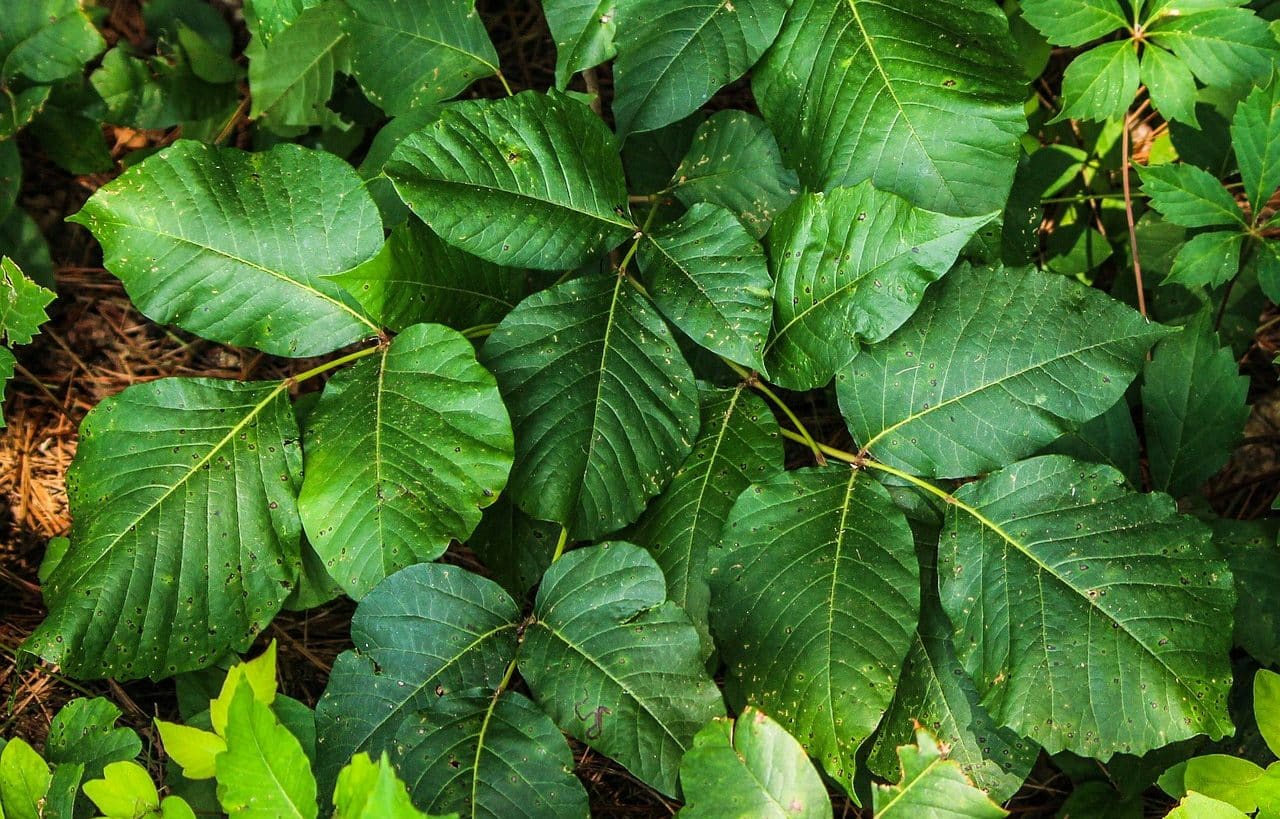
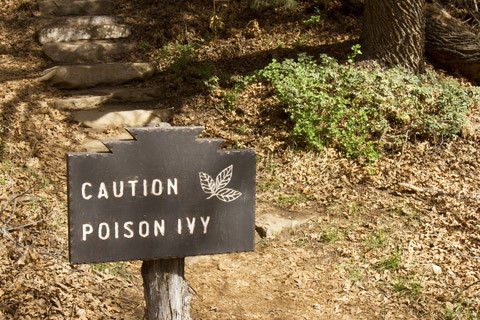
Poison ivy and oak are members of a plant family that includes poison wood (an itch-causing plant found in Florida) and poison sumac, according to W. Hardy Eshbaugh, Ph.D., a retired botanist in Oxford, Ohio. “Some other members of the same plant family can cause a rash in some people,” Dr. Eshbaugh says. “The skin of a mango can be irritating to sensitive skin. And Chinese lacquerware boxes can cause a poison-ivy-like rash.” When the itchy rash sets in, you want to know how to treat poison ivy and oak fast. But it’s also important to understand the cause and how to prevent it.
“You can get the same kind of dermatitis from the shells of raw cashews,” notes Kathryn A. Zug, M.D., a dermatologist at the Dartmouth-Hitchcock Medical Center in Lebanon, New Hampshire.
The culprit in all these plants is a potent chemical called urushiol. Seven out of 10 people are allergic to it, you can get a rash from just one-billionth gram of the stuff, and it remains potent on garden tools and other surfaces for up to five years. No wonder urushiol is the champion of all allergens — the cause of more allergies than any other known substance.
You needn’t stay out of the fields and woods, though. Here are some remedies to help you cure poison ivy and oak.
POISON OAK & POISON IVY TREATMENT TIPS
Get the Poison Off Fast
“The best treatment for poison ivy or oak is to wash with soap in the shower within 5 to 15 minutes of exposure to the plant,” Dr. Zug says. In other words, you need to wash off the urushiol long before you see a rash. This is possible, of course, only if you realize your mistake while you’re in the woods. Rubbing alcohol also might work. “Rubbing alcohol is a solvent that, in order to be effective, must be applied and washed off with a washcloth soon after contact with the plant,” Dr. Zug says.
Put Yourself in the Pink
One long-preferred poison ivy treatment is Calamine lotion. “Calamine lotion is still one of the best treatments for moderate cases of a poison ivy rash,” says Robert Averill, M.D., a dermatologist in western Massachusetts and northern New Hampshire.
“It’s the classic treatment for poison ivy,” Dr. Zug agrees. “Calamine dries up blisters, it is soothing and cooling, and it relieves the itch.”
Vinegar Works, Too
Wondering about a poison ivy treatment using common household items? A vinegar compress is good for drying the poison ivy rash and soothing the itching, says Robert Sommer, M.D., a dermatologist in Portland, Maine. “Use half a cup of white vinegar. Pour it into a pint container and add water up to the pint mark. Put it in the refrigerator; it works best cold.” Dampen a cloth or gauze with the cold vinegar solution and apply it to the poison ivy rash, Dr. Sommer says.
[text_ad]
Use Milk to Shake the Itch
Dr. Sommer also recommends a cold milk compress, especially if you have a poison ivy rash on your face, which can be irritated by vinegar. “You take a clean rag and soak it in whole milk. You need whole milk for the fat,” he says. “Place the damp rag — damp, not runny — on the rash. Leave it on for 10 to 15 minutes. The cold stops the itch, while the fat lubricates the skin.” Dr. Sommer says to rinse off the milk with warm water.
Listen to the Camp Nurse
The camp nurse if often the first call for getting tips on poison ivy treatment. “When the kids get poison ivy rashes, I make a mixture of Domeboro and water and apply it to the rash with gauze pads,” reports Tricia Barr, R.N., a nurse at Camp Walt Whitman in Pike, New Hampshire. Domeboro is an over-the-counter astringent that comes in tablet or powder form. “It’s a good drying agent,” Barr says.
Poison Ivy and Oak Treatment Tips
This Weed Is a Jewel
Ever wonder about an herbal poison ivy treatment? Corinne Martin, a certified clinical herbalist in Bridgton, Maine, likes to use jewelweed to soothe a poison ivy rash. A common plant found throughout the Northeast, jewelweed has a watery stem that contains juice good for stopping the itch. You can collect it in meadows during late summer. “Just crush the stems in your hands and rub the juice right on the rash,”Martin says. She notes that Euell Gibbons, the famous natural food and remedy author, would process jewelweed stems and water in a blender and freeze the mixture in ice cube trays. “Jewelweed ice cubes are great against an itch because of the combination of the jewelweed and the cold,” Martin says.
Use the Ocean as a Lotion
How about how a salt water poison ivy treatment? Peter Brassard,M.D., a family doctor on Block Island, Rhode Island, says that a good sea bath can work. “Just the act of wading in the ocean will wash your sores,” he says. “And the salt water will help dry them out.”
Make Your Own Salty Sea
“Epsom salts dry things out,” Dr. Zug says. “They are especially good for poison ivy rashes and other oozy dermatitis. Just follow the directions on the box and sprinkle some into a lukewarm bath.” You can get Epsom salts at your pharmacy or supermarket.
Feel Your Oats
“If you have itchy skin, try taking an oatmeal bath,” says Donald Dickson, R.Ph., the owner of Dickson’s Pharmacy in Colebrook, New Hampshire. Colloidal oatmeal, such as Aveeno, is made for bathing. You can buy Aveeno over the counter.
A Plant Man Picks Tecnu
As a botanist, Dr. Eshbaugh has spent years getting up close and personal with itch-causing plants and knows a thing or two about poison ivy treatment. His favorite remedy for how to treat poison ivy and poison oak? Tecnu Oak-n-Ivy, available over the counter at drugstores. “Tecnu works on anything in the Anacardiaceae family — the family poison ivy and oak belong to,” Dr. Eshbaugh says. “You can wash with Tecnu immediately after contact with poison ivy, or you can put it on before you go out into the field. You can even use it after you have already broken out with a rash. Each way seems to work.”
Pump Up with Steroids
If other home remedies for poison ivy treatment fail, a good fallback is a steroid such as over-the-counter 1 percent hydrocortisone cream, Dr. Brassard says.
Excerpt fromHome Remedies from a Country Doctor, brought to you by Skyhorse Publishing.
Do you have tips for poison oak and poison ivy treatment? Let us know below!
This post was first published in 2013 and has been updated.