Lyme Disease Treatment | One Woman’s Quest for Answers
In July 2002, having spent an idyllic week’s vacation on one of the Elizabeth Islands off Cape Cod, I came home to New Hampshire. The island — a glorious, wild place marked by ancient beech forests, kettle ponds, and open grasslands — is also crawling with ticks, which at the time seemed only a minor […]
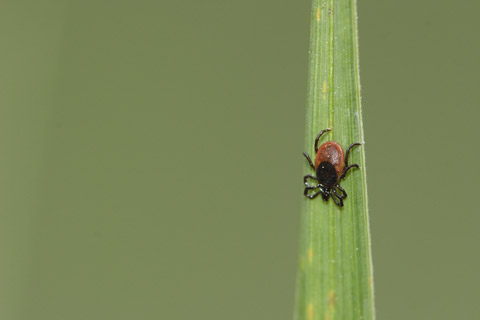
The Deer Tick can spread Lyme disease.
In July 2002, having spent an idyllic week’s vacation on one of the Elizabeth Islands off Cape Cod, I came home to New Hampshire. The island — a glorious, wild place marked by ancient beech forests, kettle ponds, and open grasslands — is also crawling with ticks, which at the time seemed only a minor obstacle to enjoying the abundant gifts it offers.
Within a month of my return, however, I would begin to learn a bitter lesson — in the history, ethics, and politics of a debilitating disease, and the mystery that has surrounded it for more than 50 years.
Like many others who visit New England’s islands, I was bitten by ticks, more than once. Ten days after getting home, on a very hot day, I felt cold. I put on sweaters and heavy socks and lay down under a pile of blankets. I shivered and shook. My head pounded. More than anything, I craved sleep. I lay in bed, shivering and sweating. I finally found the strength to call my doctor, who waved away my suggestion that I might have Lyme disease.
Some days later, bruises appeared on my legs, first one and then another, and within another day, my entire body was covered in them. A friend, a nurse, saw the deep blue marks and said, “You have Lyme disease! Get to a doctor right away!” How she knew I have no idea — because they didn’t look like the pictures of the bull’s-eye rash I’d seen in books.
My doctor ordered blood tests. Indeed, I had Lyme. Soon my doctor was talking with specialists at the Centers for Disease Control and Prevention (CDC) in Atlanta, Georgia. I was a rare case. I had all four of the identifying factors: a verified tick bite, flulike symptoms, a positive blood test, and a bruiselike rash, known medically as erythema migrans, or EM. My doctor prescribed four weeks of a powerful antibiotic, doxycycline, and when the symptoms hadn’t completely subsided in that time, an additional two weeks.
The antibiotics cleared the rash immediately. The fever was subdued, but not my fear. I Googled “Lyme disease” on my computer. More than a million results came up, and to my dismay, many of them were in remarkable disagreement about almost everything. There were scores of “Lyme disease associations” to consult. Which ones were useful? I had no way to tell. I read dozens of personal stories — all with the same theme. The Lyme disease treatment was as perplexing as its cause.
I read about Allen C. Steere, M.D., the physician who first gave the disease its name — and who later received death threats and refused to make public appearances without security guards. I read about doctors who had been hauled before their state medical boards for prescribing long-term antibiotics, risking suspension of their licenses. I was mystified. This was beginning to sound like a John le Carre novel. My journey down the information highway had left me with more questions than ever.
Some of the Web sites I visited, such as lyme-rage.info, appeared to be outlets for fury against the medical establishment and the insurance companies. I could relate to that. My health insurance had expired just two weeks before I was diagnosed. A cancer survivor, I was in the midst of applying to insurance companies when I received the Lyme diagnosis. And so, on the next application, I dutifully reported my past history — not only with cancer but now with Lyme. That application was denied. The reason stated? Lyme disease. I thought, “How could Lyme” — which I thought of then as merely an achy, flulike illness — “be worse than cancer?”
Whenever people heard that I had Lyme, they had stories to tell. That’s how I learned about Lauren Lemay.
At her Gilford, New Hampshire, home, she sits on her deck looking out across the gentle view of the distant hills. For six years she has struggled with this sickness. “The day before I got sick, I ran 10 miles, played nine holes of golf, and then I painted the living room. That was my typical day,” Lauren recalls.
Lauren Lemay: A former long-distance runner, she has fought lyme’s devastating effects for six years. “I was ready to try anything … there was so much wrong I felt I was dying.” Photo Credit : Smith, Dana
Lauren, now 58, was an elementary school teacher, a long-distance runner, and a vegetarian for nearly 40 years. Health was her constant companion. “The next day, I was getting ready to go teach, and I just couldn’t move,” she says. “I was so tired, like nothing I ever remember in my life; I just wanted to sleep. I dragged myself to work, got through the day, and came home and slept and slept. And I was freezing. It was a hot day, and I crawled into a sleeping bag and curled up in a chair, shivering.”
That was only the start. With increasing desperation, Lauren consulted 15 or 20 doctors and was diagnosed with chronic fatigue syndrome, Crohn’s disease, anorexia, depression, and empty nest syndrome. When she ran out of physicians in her local area, she consulted doctors at Boston’s Lahey Clinic and Beth Israel Deaconess Medical Center. When she found no relief there, she continued to seek a diagnosis. She visited a Chinese doctor, a psychic, a Venezuelan shaman, and a woman who conducted business out of a yurt in the middle of the woods in Western Massachusetts. “I was ready to try anything,” she says.
She wasted away to 94 pounds and could hardly walk: “I was so scared. I would see it in people’s faces; I’d be hanging on to my husband’s arm, hanging on to the grocery cart. Me, who was always on a bike or running up a mountain. By that time, there was so much wrong with me, I felt I was dying.”
Lauren was tested for Lyme half a dozen times. The results were negative — but Lyme blood tests are widely known for both false positives and false negatives. In New York, finally, a “Lyme literate” physician, or “LLMD,” determined that she had advanced Lyme disease and put her on a doxycycline derivative. “I was on it a year and a half,” she says. “The medication made me sick to my stomach, and I had to go off it sometimes. But I’m so much better now. Now I’m off the antibiotic and seeing a Vietnamese practitioner in addition to my doctor in Portsmouth. I’m not all the way there yet, but I’m back to work part-time.”
Lauren wasn’t the only Lyme patient I met who has wandered helplessly through the narrow, darkened hallways of conventional and alternative medicine, seeking relief from their myriad symptoms. It turned out to be a rather common story, in fact — one that stretches back in time some 50 years. During my research, I came across a book called The Widening Circle, by Polly Murray. Published in 1996, it tells the story of the early history of Lyme disease.
In 1956, Polly Murray, an artist and housewife in Essex, Connecticut, began to suffer an array of inexplicable health problems. Doctors couldn’t find a cause. While she was pregnant with their second child, she and her husband, Gil, moved across the Connecticut River to Lyme, a pastoral place with views of the big river and of Long Island Sound.
A precise person, Polly kept a record of her family’s complaints. By 1964, they had four children, all suffering from rashes, fevers, aching and swollen joints, and diarrhea. Visits to the doctor were frequent; relief was rare. In fact, thumbing through the symptoms Polly recorded throughout the 1960s, you might think you were looking at the notes of a severe hypochondriac — except that her entire family was suffering from these complaints.
Eventually, doctors suggested a complete workup, including a psychiatric evaluation, at New England Medical Center in Boston. After three weeks of tests and observation, Polly came home with sleeping pills and antidepressants. But she continued recording all that was happening to her. And what was happening to her didn’t stop.
She discovered that other people in the shore area were experiencing the same ailments. She compared notes with Judith Mensch, who lived in Old Lyme, and in October 1975 they called the state health department to report the plethora of symptoms that were plaguing them, their families, and now their neighbors. Polly asked for an investigation. When she told her doctor what she’d done, he was furious and accused her of “stirring up trouble.”
Nevertheless, on November 20, 1975, she was referred to Yale University to consult Allen Steere — a rheumatologist who had spent his first two years out of medical school working for the Epidemic Intelligence Service (EIS), an arm of the CDC. Steere showed a deep interest in her case and wanted all her notes. She also gave him the names of other people she knew who were suffering as well.
By early in the new year, Steere had recorded 39 children and 12 adults from the Lyme area who were experiencing these symptoms — all of which he connected to the bite of a tick, and which he collectively called “Lyme arthritis,” a term that was later broadened to “Lyme disease.”
On a national television news show, Steere explained the epidemic. Irate that their town was now on the map for unwelcome reasons, Lyme residents accosted Polly again and again. Fear spread that the town’s real estate values would plummet.
From that small circle grew an epidemic of similar stories — people with elusive symptoms that could not be conclusively diagnosed. Doctors surmised that they had fibromyalgia, multiple sclerosis, amyotrophic lateral sclerosis (ALS, or Lou Gehrig’s disease), lupus, and sometimes Parkinson’s. Yet this mystifying tick-borne illness was little known outside the growing number of Connecticut and Long Island shoreline communities where it was prevalent.
In April 1979, a dramatic increase in the number of ticks was recorded in Lyme and its environs. The Connecticut Agricultural Experiment Station, however, was inexplicably quoted as saying that ticks were “new to the state.” They certainly were not new to Polly and her neighbors. By then, they had been plagued by ticks for more than 20 years.
Polly’s experience sounded alarmingly like Lauren Lemay’s. But I had to remind myself that a half century had passed in the meantime. I shook myself back into the present and drove to New Haven to see a tick specialist.
Kirby C. Stafford III, Ph.D., the Connecticut state entomologist, sits in his office at the Agricultural Experiment Station in New Haven, more than willing to talk about his favorite subject. A picture of a deer tick (Ixodes scapularis, also known as I. dammini, or the black-legged tick), blown up to almost human proportions, adorns his wall. Under magnification, the creature looks powerful and indestructible, like a prehistoric tank. It is, he tells me with almost paternal glee, “the ideal parasite.”
Dr. Kirby C. Stafford: Connecticut’s state entomologist has committed 19 years of his career to tick research. “[Lyme disease] is not going away.” Photo Credit : Smith, DanaStafford gestures to his wall of filing cabinets: “Ticks, Lyme disease — I’ve been in it 19 years. The Polly Murray thing happened in the mid-’70s. Allen Steere published his first paper in 1977, and the organism itself was discovered in 1982. After that, things proceeded rapidly.” He’s telling me about the cause of the disease: Borrelia burgdorferi, the corkscrew-shaped bacterium that spirals its way into humans from the mouths of ticks.
The mustachioed Stafford has a calm, precise demeanor, and with pens and eyeglasses case stuffed into his shirt pocket, is the very picture of a dedicated scientist. He continues: “At that time, the only place in the country you could be tested for Lyme was right here. Dr. Louis Magnarelli developed the test.”
Even as we talk, researchers in a lab near Stafford’s office are opening up envelopes and removing ticks mailed to them for analysis. Some 6,000 ticks arrive here each year. Scientists grind them up and test them for the spirochete bacterium that has bored its way into hundreds of thousands of Americans to date, and even deeper into their consciousness.
Stafford is the author of the Tick Management Handbook, a booklet that is distributed throughout southern Connecticut. (It’s also available online at ct.gov/caes/site/default.asp.) In it, he discusses tick biology, tick-borne illnesses (Rocky Mountain spotted fever, ehrlichiosis, babesiosis, encephalitis, tularemia, Lyme disease), prevention, chemical control, and landscaping methods to reduce the Ixodes population — in part by managing the numbers of deer, white-footed mice, and chipmunks (all principal hosts of disease-bearing ticks) on one’s property — and Lyme disease treatment.
“It’s not going away,” he says confidently. He shows me the CDC’s incidence map, noting how the disease has spread from those early days in Lyme — the concentrations now radiating like a dark stain all the way out into the Northeast. Indeed, 49 states in the Union have now reported cases. There are a number of places where Stafford and his researchers have been collecting ticks for many years, including Polly Murray’s backyard.
“How does Lyme spread?” I ask.
He shrugs: “Migrating birds. There’s no sure way to know. The movement of deer and the way people travel to tick-infested areas with their pets — all can be factors. But it’s widely believed that birds played a role in a lot of this.” He shows me the tick’s life cycle, which involves at least four critical stages. “It’s like a mechanism that needs all the parts to function,” he explains.
Having thought of the tick as an indestructible machine, I suddenly think it’s a miracle that any tick survives with so many bridges to cross until it reaches the final stage on the back of a moving deer. “What about reducing the number of deer?” I ask.
“We’ve been wrestling with that for a number of years,” Stafford replies. “We’ve done studies, and we’ve found that it can help substantially. But people get kind of exercised about hunting deer.”
“Imagine virtually eliminating Lyme in five years! I’ve been living in the epicenter of the Lyme world for four years already. We could be almost done by now.”
In her clipped British accent, Georgina Scholl, M.D., is talking about her passion: killing deer to save people. Slender, auburn-haired, dressed in linen, she’s the vice chair of the Fairfield County Municipal Deer Management Alliance, a group that provides residents with a “deer hotline” and information on hired hunters. These towns, which suffer the highest incidence of Lyme disease, are trying everything they can to contain this epidemic.
Outside the French doors of her kitchen in Redding, Georgina looks out on a wildflower meadow that slopes gently toward the woods. The turquoise waters of the family’s pool ripple in the breeze. This bucolic scene, once their paradise, is now a kind of no-man’s-land for her family — what she calls “no child left outside.”
“We moved here to be in the country,” she explains. “We built a treehouse for our sons at the edge of the field, and that of course is where the ticks are. And then we found out about Lyme. We had no idea.” Georgina is a neurologist; her husband is an immunologist. “The problem is, we’ve got too many deer,” she adds. “Why would anyone tolerate a problem that’s destroying the woodlands, causing fatal car accidents, and spreading disease?”
Last summer, Georgina and her husband took a trip to Maine and stayed on Monhegan Island, where there are few ticks. “It was wonderful to be somewhere where they weren’t,” she notes. But it wasn’t always so.
On Monhegan Island, a little rock of a place 10 miles out in the ocean off the coast of Maine, Peter Rand, M.D., and his band of fellow sleuths at the Maine Medical Center Research Institute have spent almost 20 years studying the relationships among deer, rats, and ticks, and how their population levels correlate with the spread of Lyme disease. “Oh, I’d love to write a book about all this,” says Rand, a handsome man in his 70s, with a full head of white hair and a patrician bearing. From his office in South Portland, he loves to tell the story, an adventurous tale of trips to the island on the high seas, collecting ticks in the snow, and late-night sessions around a roaring fire, the team talking about the future of their research. “The beauty of the island was that it was contained,” Rand explains. A scientist’s dream.
For part of that time, most of the 75 full-time residents of Monhegan acted as guinea pigs; the island’s little general store became their makeshift clinic. “The people would come down and put their arms on the meat counter, and we’d draw blood,” Rand recalls. Dogs and cats were tested, too. He sometimes felt as though he were on the set of M*A*S*H.
His team worked like that for 13 years: “We found that as the years went on, up to 13 percent of the island’s residents had Lyme.” The local fear was that the presence of the disease would scare away visitors, who provide Monhegan with vital revenue. And so, after furious debate, residents agreed to have all the deer killed. Between 1996 and 1999, more than 100 deer were shot and their carcasses processed (the meat was donated to food banks), effectively removing the most active tick host from that island. And now, six years later, Lyme is rare on Monhegan. Rand’s study was a triumph in the annals of Lyme disease prevention.
One comment I heard more than once is that Lyme doesn’t kill you — but you wish it would. In Brunswick, Maine, I visited Rita Losee, a little fireball of a redhead who was once a nurse and a triathlete. Bitten by a tick while hiking the Appalachian Trail, she was diagnosed quickly, but when she’d finished the recommended course of antibiotics, her symptoms returned. “There were three or four times when the pain was so awful, I was within days of killing myself,” she remembers. Her doctor changed her diagnosis to chronic fatigue syndrome. At first she believed him — but then she started researching on her own. “I convinced my doctor to put me back on antibiotics,” she says, “and I started to feel better again.”
The mysteries of Lyme haunt her: “One of the things that really puzzles me is that so many doctors refuse to know about Lyme. I was in touch with one doctor, and he and his family all had Lyme. I called him up and he said, ‘I don’t want to talk about this on the phone,’ and he invited me over. I felt as if I were in a Kafka novel. I’ve never felt anything like this, the strange energy that surrounds Lyme. I asked him about it, and he talked about the denial that exists around Lyme. And then he told me that there was a writer for Newsday who started investigating, and he traced the whole thing to a little island off Long Island where the United States has a biological factory, and that this Lyme bug was an escapee.”
I knew what Rita meant by the “strange energy” surrounding Lyme. When I visited Georgina Scholl and asked her to explain the controversy, she covered my tape recorder with her hand and whispered, “Please!” And then she said, as if in mediation, “Why do we have to have this disagreement? Let’s just get rid of Lyme!” Kirby Stafford and Peter Rand both told me they wouldn’t answer questions about the “biopolitical” aspect of Lyme. What did they mean by that? I wondered. What was there about this disease that could not be discussed?
And then I met Marjorie Tietjen, a sweet-natured woman who lives with her husband and son in a house in the woods of Killingworth, Connecticut. Marjorie, who has suffered from Lyme since 1989, calls herself a Lyme activist. I’d read her articles on the Web and was impressed by her wealth of information. She welcomed me to her home. Like almost every other Lyme patient I’d visited, she had stacks of papers and folders piled on the dining room table.
Marjorie Tietjen: Eighteen years of coping with lyme have turned her into an activist. “My frustration has been that wherever I go, no one focuses on the root of the problem.” Photo Credit : Smith, Dana
Marjorie had her own story to tell me, but she also had a book she wanted to give me: Lab 257: The Disturbing Story of the Government’s Secret Plum Island Germ Laboratory by Michael Christopher Carroll (HarperCollins, 2004).
Carroll discovered that Plum Island, which sits in eastern Long Island Sound, was set up after World War II with the help of Erich Traub, a German germ warfare expert. During the war, Traub had operated a lab on an island in the Baltic Sea. Islands, it was thought, were ideal for such research, as they’re self-limiting. But we know now that that’s an illusion. As Carroll points out: “Plum Island lies in the middle of the Atlantic flyway, the bird migration highway that runs between breeding grounds and winter homes from the Caribbean to the Florida coast, up the East Coast to the icy reaches of Greenland. In addition, deer swim back and forth between the island and the mainland.”
Compiling information received through the Freedom of Information Act, Carroll details Plum Island’s shadowy netherworld: virus outbreaks, biological meltdowns, infected workers, contaminated raw waste flushed into the Sound … and experimental tick colonies, bred for research on vector-borne diseases.
As the big white ferry New London pushes forward into deep water, steel-gray clouds hide the sky. The trip to Long Island takes about an hour and a half, and midway through our journey, on the port side, Plum Island appears, crowned with a water tower and edged with large, flat-roofed buildings. Off the island’s shores, fishing boats and pleasure craft bob. At its tip, a picturesque granite-based lighthouse sits, like a photo on a postcard.
On the map, Plum Island lies like an arrow, one end pointing toward the Connecticut coast and other toward Long Island’s North Fork. At the same time that Polly Murray and many others in that area were beginning to experience bizarre symptoms, Plum Island’s germ research was up and running. Birds, stopping on Plum Island, often flew next to either Montauk (on the South Fork) or Lyme, where the rich estuaries of the terminus of the Connecticut River lured them. Initially, the highest incidences of the disease were in Lyme and surrounding towns, and at the tip of Long Island.
Lab 257 has been shut down, but other labs on the island perk along. If infected ticks did escape from this island, they’ve long since done the damage and nothing can stop them now; Borrelia burgdorferi is out and about, doing its job, making people sick.
And as it spreads, physicians and researchers continue to squabble among themselves: Some say that long-term antibiotics are the only treatment for Lyme disease, while the more conventional among them advocate only short doses of antibiotics — and believe that if a patient needs a longer protocol, the illness must not be Lyme. Insurance coverage is often denied.
One way to stop an epidemic is to redefine it. Recent guidelines issued by the Infectious Diseases Society of America (IDSA) have narrowed the disease’s diagnostic criteria so tightly that it’s hard for any chronically ill Lyme patient to fit the profile — leaving thousands of people robbed of an answer.
And one way to control an outbreak is to determine which doctors can treat it and which ones cannot. According to the Lyme Disease Association, since the early 1990s more than 30 Lyme specialist physicians in 10 states have been brought before state medical boards under charges of overdiagnosing Lyme and overtreating with antibiotics. This, of course, is a chilling development for doctors who want to treat Lyme disease patients.
Charles Ray Jones, M.D., is a 78-year-old pediatrician whose New Haven practice has embraced 10,000 children with Lyme since 1968. “I didn’t know I was treating Lyme patients at the time. There was no such thing,” Jones says. In fact, he’s not only the world’s foremost pediatric chronic Lyme disease specialist, he’s virtually the only one.
Dr. Charles Ray Jones: Hero of the chronic lyme community, he is also the target of a medical licensure hearing. “it’s a high-risk trade … I’m considered the great satan.” Photo Credit : Smith, Dana
I’ve come to see him on a rainy Sunday afternoon, the only day of the week he doesn’t see patients. A humble man, Jones lives in an apartment in an unremarkable high-rise. His commute to his office is a flight of stairs.
His patients come from all over the country to his office, just down the street from Yale’s School of Medicine. In addition to seeing patients all day long, for the past year he’s been driving north on a regular basis to a Hartford hearing room, trundling a wheeled suitcase filled with papers relating to the case against him, which may rob him of his license to practice.
He greets me in the courtly manner of his generation, almost bowing. In placid tones, he explains his life with Lyme. In the 1960s, he was a staff physician at Memorial Sloan-Kettering Cancer Center in New York. During that time, he and his wife began to look to the Connecticut countryside as a better place to raise their children. In 1968, they moved to Hamden, then a sleepy hamlet beside the Quinnipiac River, and he set up his practice.
“I started seeing children in clusters with what we thought was juvenile rheumatoid arthritis,” he says. “This was very rare. But it wasn’t really JRA. It didn’t fit the whole picture. The clusters were not just in Lyme; they were all around. And there were many of them. Polly [Murray] was instrumental because she demanded they do something about this.”
Along with Allen Steere and Eugene Shapiro, M.D., who now sits on the opposite side of the hearing room, Jones worked to solve the puzzle of this peculiar, crippling ailment. “Sure, we were colleagues at first,” he notes. “We were all trying to figure it out. You could say we were mired in a lack of understanding.” For Jones, this search for knowledge transformed into his specialty. He became an LLMD, Lyme literate by evolution.
“At what point did all this become contentious?” I ask.
“I was never part of that,” he says. “I heard things, but I was busy. I just figured that was their problem.”
Now it’s his problem, too. Jones has been charged with diagnosing two children in Nevada with Lyme disease before examining them, and with prescribing antibiotics for them over the phone. Shapiro, his former colleague, a professor of pediatrics and epidemiology at Yale’s medical school, not only brought the charges against Jones but also helped write the guidelines that have narrowed the Lyme disease diagnostic and treatment guidelines. The Hartford Courant once quoted Shapiro as saying that he had had calls from physicians in Connecticut “begging me to see their patients so they don’t have to see Dr. Jones.”
On the day I visit, Jones sits at his desk in a big leather swivel chair. On the desk are neat stacks of patient files. For the hearing, which he calls variously a “conspiracy,” a “witch hunt,” and an “inquisition,” his accusers have subpoenaed many of his charts. “I’m considered the great Satan,” he says with a gentle smile, “which always amuses me.”
“This is not a malpractice suit,” he notes. “If the charges were serious, it would be malpractice.” He goes so far as to label the charges “trivial.”
In his office suite are five rooms filled with patient files: 10,000 children, all the way back to the beginning. “Seventy-five percent of them are cured,” he claims. For his legal defense fund, almost a million dollars has been raised by his patients’ parents and, in some cases, by his patients themselves. “This little boy,” he says, pointing to a photo of a cherub-faced youngster, “had a lemonade stand this summer, and he raised $33. Another little boy, 6 years old, came in with 21 cents in a paper cup.”
Hundreds of parents have crowded the Hartford hearing room in support of this aging doctor, a widower of 12 years, who in any other life would be retired. “A lot of people who dealt in Lyme are no longer doing it,” he says. “It’s a high-risk trade. But I’m less encumbered.”
Opponents debate Jones’s figures, maintaining that many of these children don’t have Lyme disease. If they succeed in wresting his license from him, the Lyme community will have lost perhaps the only physician left who’s willing to treat these children long-term — some of whom, he says, would end up in institutions without proper treatment for Lyme disease.
Clearly, the new diagnostic and treatment guidelines and the reduction in the number of physicians willing to see chronic Lyme patients will have a huge impact on the disease’s future — and the lives of the people suffering its ravages.
I realized in talking with these people that my own Lyme disease is ongoing. At the time I was diagnosed, not only was I so unfamiliar with the disease that I didn’t recognize the symptoms, but I was also confused by the massive amount of contradictory information available. And I was scared of what it all might end up costing. I’d already spent $731 out of pocket on tests and treatments. So I’ve ignored many of the painful problems I’ve experienced since my visit to that island paradise five years ago. Today my health hangs in the balance of a government and a medical system apparently unwilling not only to care for their constituents and patients but perhaps to take responsibility for an epidemic as well — a scourge that I am convinced can be traced to a scruffy little island at the eastern end of Long Island Sound.
Ferries loaded with cars and passengers pass it up to 30 times a day. Fishing boats pull catch just off its shores, and the big, bright lens at the top of the old lighthouse sweeps the water, night after night, year after year, warning passing ships away from its rocky edges.