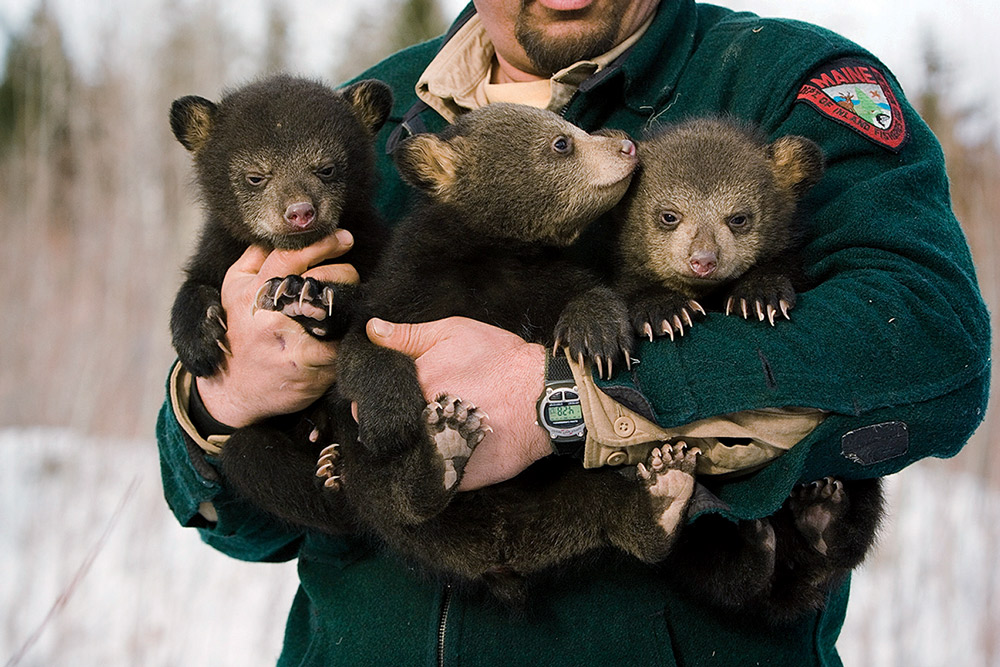
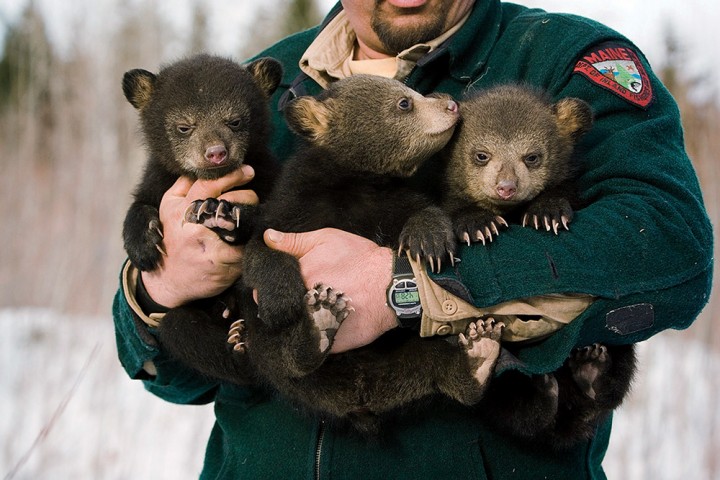
“These triplet cubs need a healthy mother to see them through the long winter.”
Photo Credit : Carl D. Walsh
Last winter I went deep into the Maine wilderness with wildlife biologist Randy Cross and his crew of technicians in the state’s black bear monitoring program. Their task: tracking Maine’s black bear population. A total of 23,000 bears is the current conservation objective.
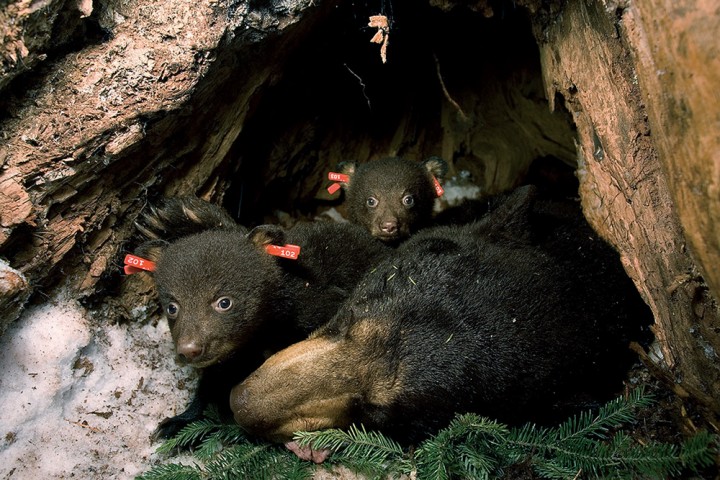
In my 23 years of professional photography, I’d never seen a sleeping mother bear in a den with her cubs. As I was shooting, I prayed that mama bear wouldn’t wake up suddenly to find my lens about a foot from her face — I was certain she’d quickly become a most uncooperative subject.
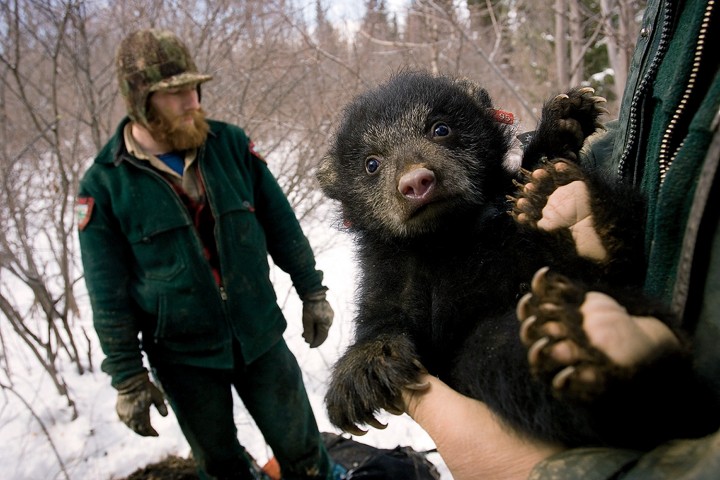
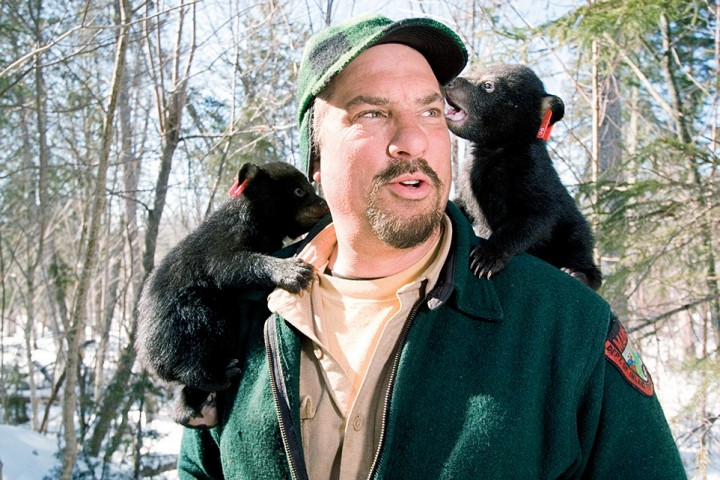
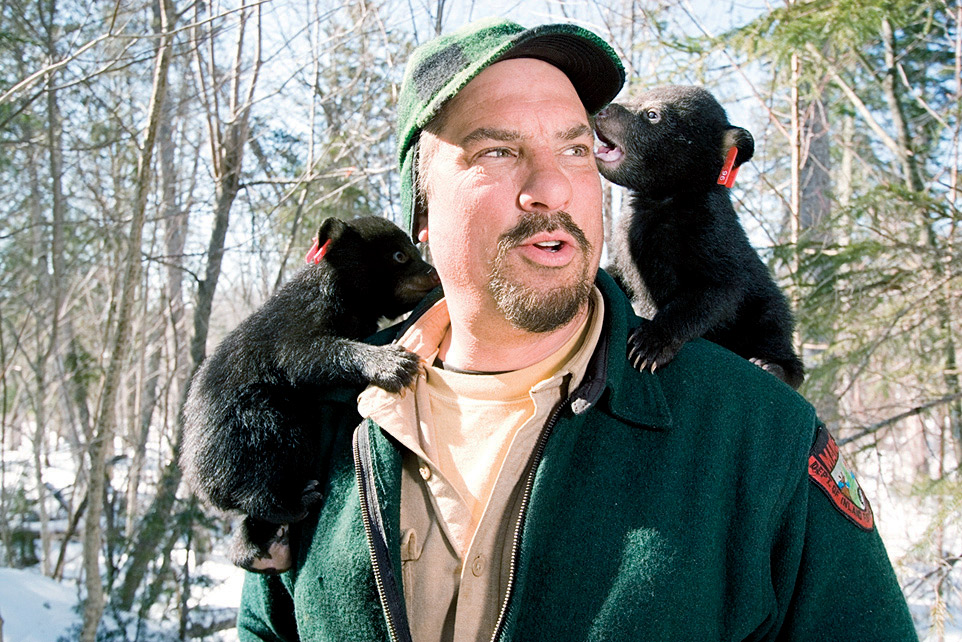
Later, a nine-week-old cub looked me in the eye, sauntered over, and proceeded to climb up my leg. I picked him up by the scruff of his neck. We were eye to eye — an amazingly intimate connection with a wild animal. At times, I had to discipline myself to keep shooting and not stop and play with the little bears.
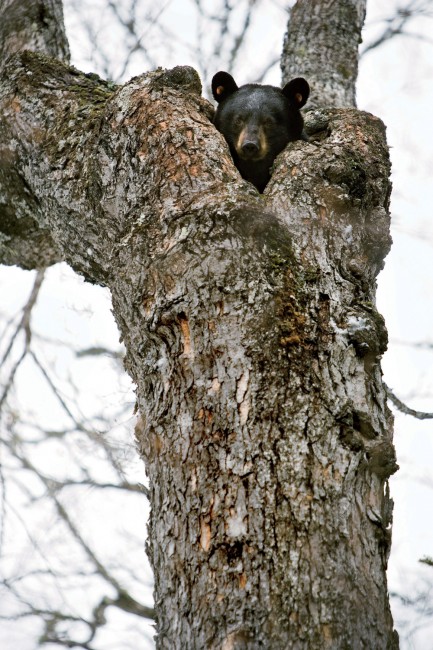
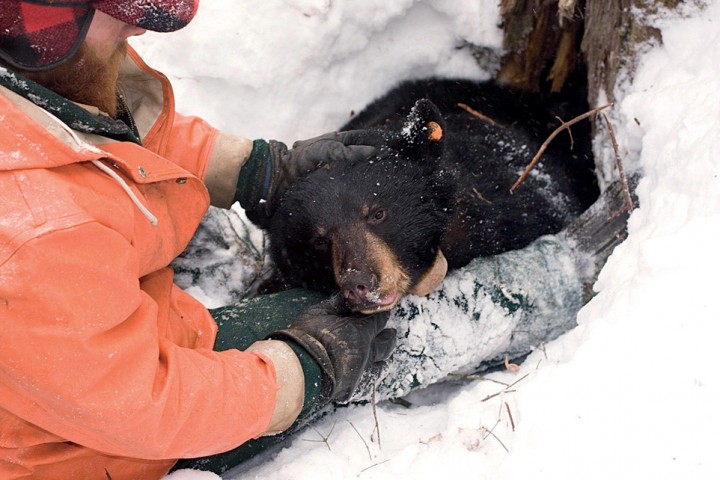
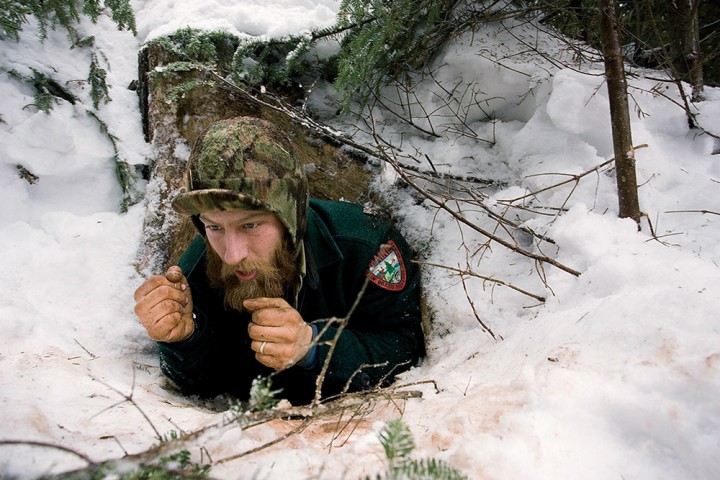
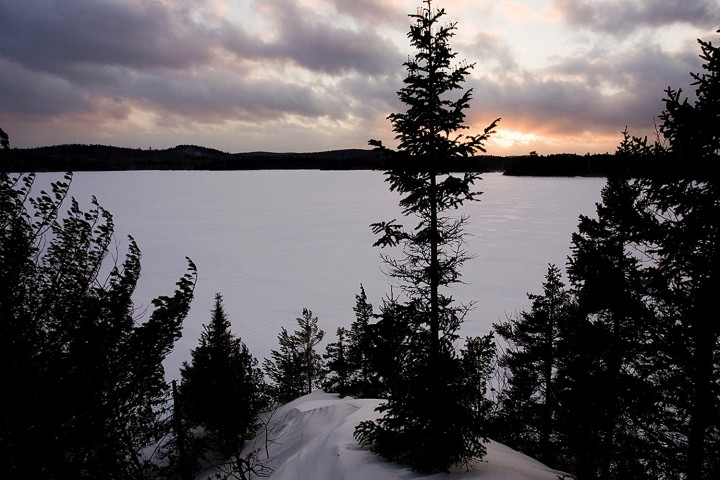
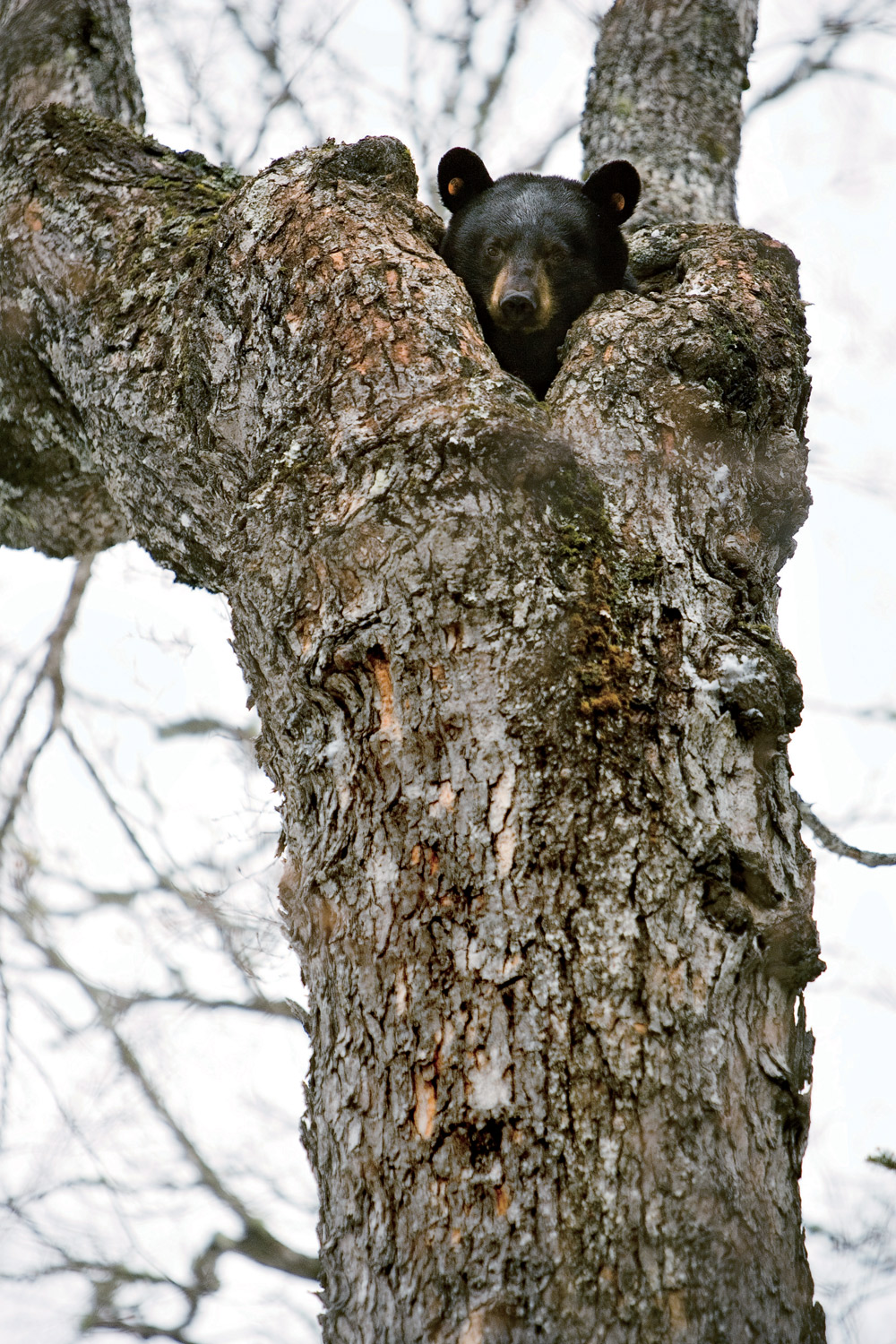
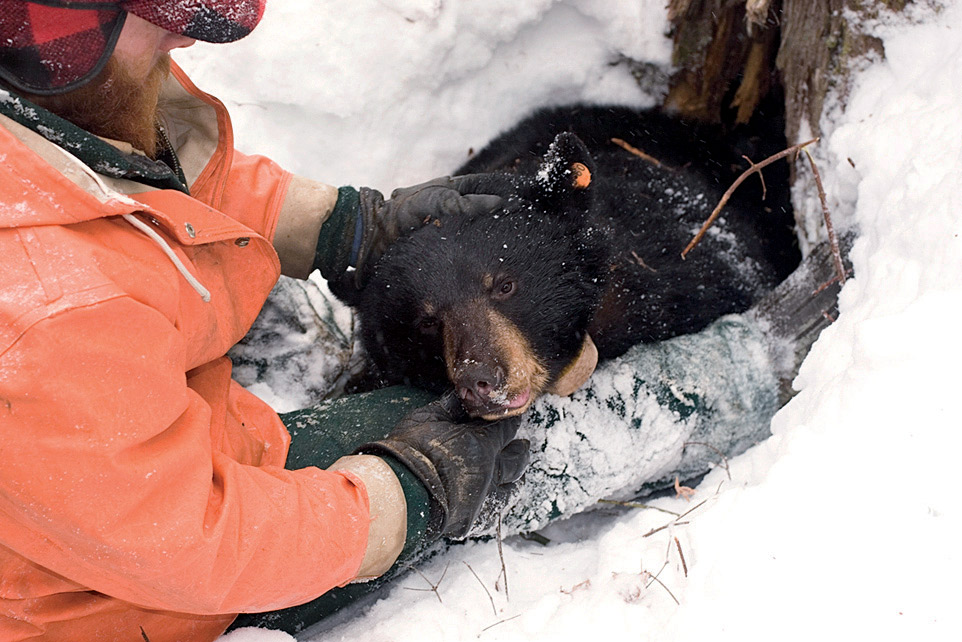
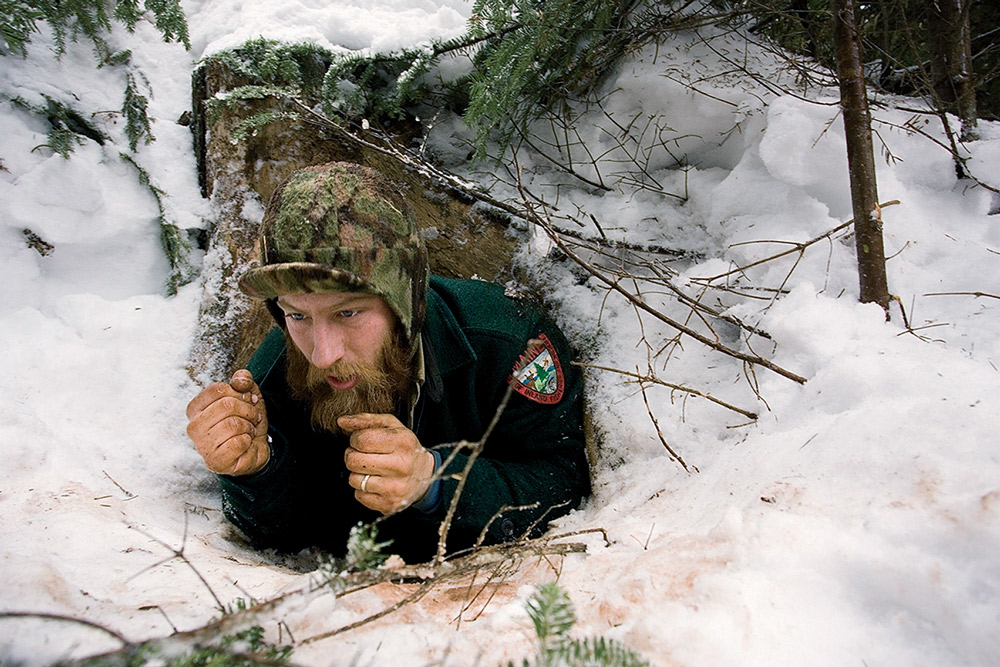
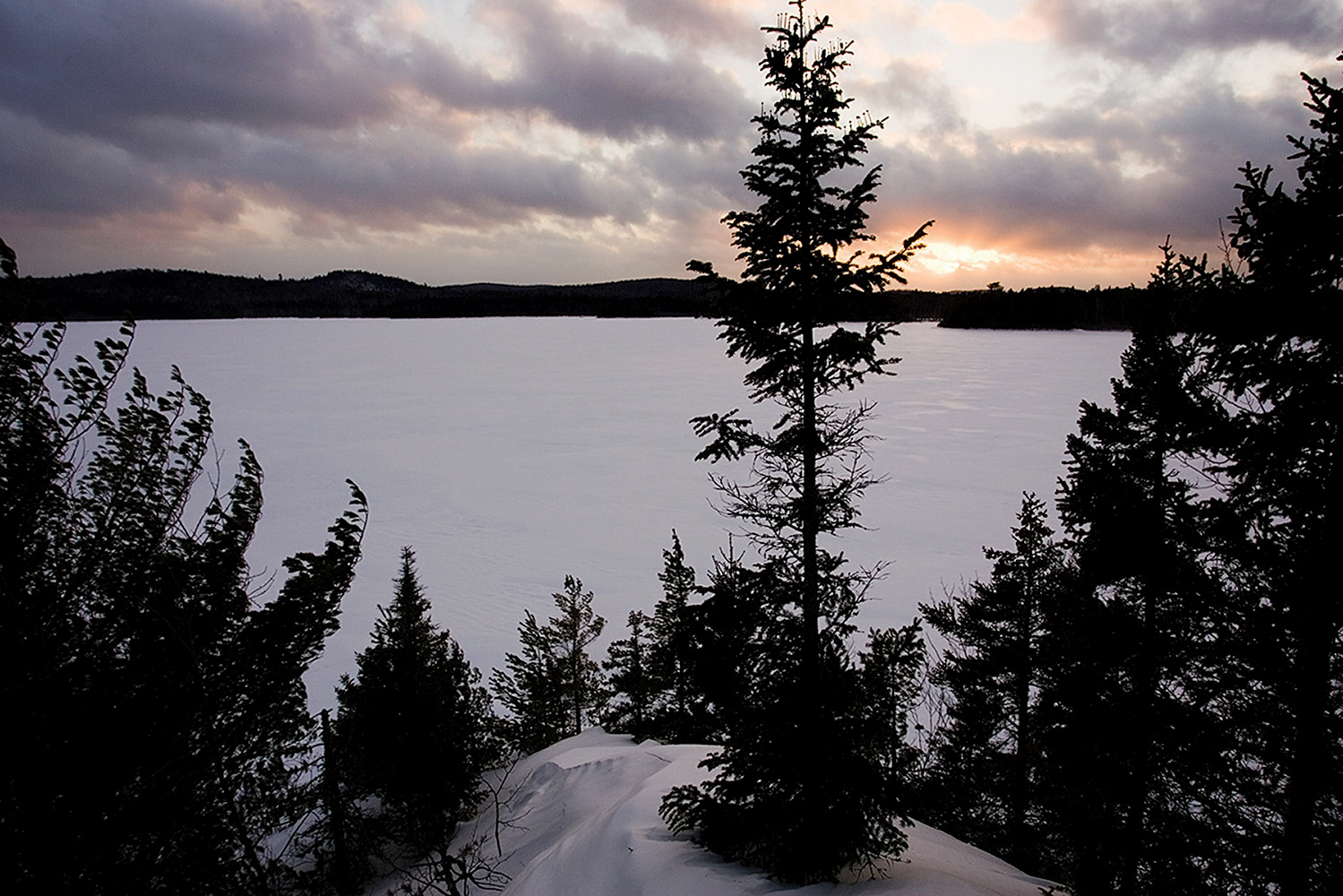
“Biologist Randy Cross told me that in more than 1,400 den visits over the years, he’s seen only eight or nine treetop dens. We heard the cubs squawking inside — they were tucked beneath their mother in the large hollow opening in the crotch of the tree.” Photo Credit : Walsh, Carl D.“Traveling on snowmobiles and snowshoes, Maine wildlife biologists use wireless telemetry to track radio-collared bears to their dens.” Photo Credit : Walsh, Carl D.“David Pert tugs a tranquilized adult bear out of the den. She’ll be weighed, measured, and given a thorough physical exam.” Photo Credit : Walsh, Carl D.“The cubs are docile enough to be handled, even cuddled. With their mother sedated, the little ones often seek out the humans near them for comfort and security.” Photo Credit : Walsh, Carl D.“Bear biologist Randy Cross knows that gathering field data is the best way to protect the future of Maine’s bears.” Photo Credit : Carl D. Walsh“These triplet cubs need a healthy mother to see them through the long winter.” Photo Credit : Carl D. Walsh“In the rarely seen world of a bear’s winter den, cubs nestle close to their mother, still sleeping off the effects of the tranquilizer.” Photo Credit : Walsh, Carl D.“After making sure the mother bear and her cubs are secure, David Pert squeezes out of the den.” Photo Credit : Walsh, Carl D.“Our base camp is a century-old log cabin on Rowe Lake in Aroostook County. After sunset, even though the wind chill was below zero, I stayed out to shoot. The sky was like diamonds on black velvet.” Photo Credit : Walsh, Carl D.Rowe Lake in Aroostook County. Photo Credit : Walsh, Carl D.Tracking Maine’s black bears began decades ago. Read Mel Allen’s account from 1978.