




Homegrown: Fresh Morels
Although you can find dried morels year-round, their fresh counterparts have a very short growing season and are available in New England only from late April through the first week or so of June. These prized mushrooms look a lot like brown sponges on sticks — but their flavor is delicate and earthy, well worth […]

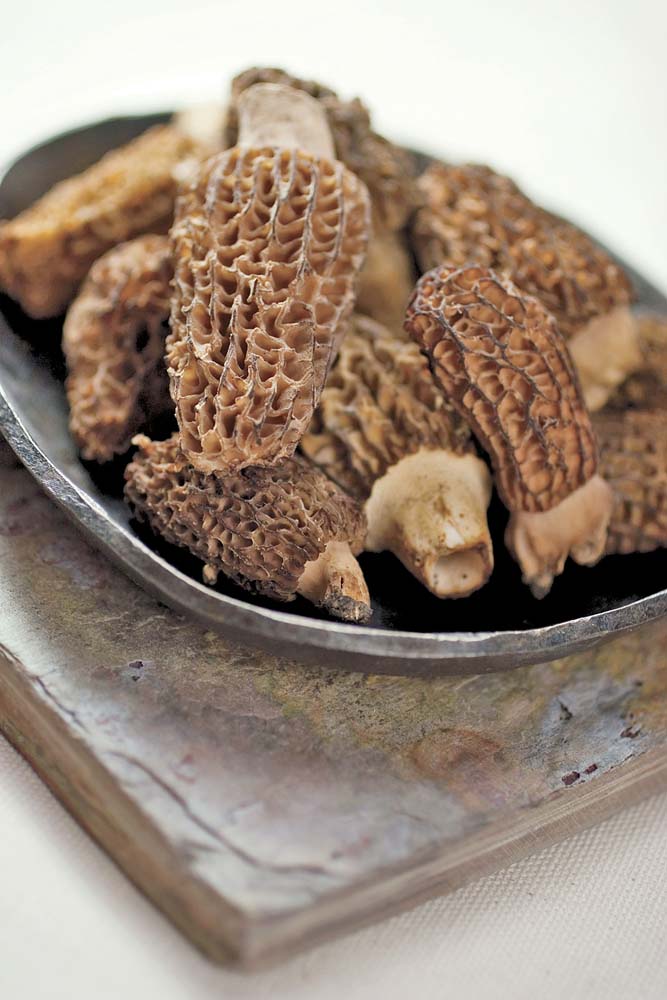
Morels are hollow, perfect for stuffing and baking as appetizers. And they’re delicious with other vegetables.
Photo Credit : Kline, KellyAlthough you can find dried morels year-round, their fresh counterparts have a very short growing season and are available in New England only from late April through the first week or so of June. These prized mushrooms look a lot like brown sponges on sticks — but their flavor is delicate and earthy, well worth incorporating into a variety of dishes.
Most commercial morels are gathered from burn sites following big forest fires in the western part of the country. Closer to home, though, they grow in patches around old apple, hemlock, cypress, cedar, and elm trees.
You may also find them near cement foundations, walks, and driveways — or hiding in the bark mulch adorning so many well-kept suburban landscapes. (If you’re not an experienced mushroom hunter, stick to your local providers, or pick up a good field guide and join a mycology club before striking out on your own.)
If your foraging takes you out of the woods and you strike gold, just make sure to ask before you pick. And never eat morels raw — they’re extremely indigestible until cooked.
Morels are hollow, making them perfect for stuffing and baking as appetizers. They’re also delicious with other spring vegetables (asparagus, fava beans, ramps), in sauces, or served with chicken or fish. In the recipe presented here, morels are chopped and sauteed in butter with fresh herbs, then baked in a frittata. Serve this savory dish for brunch, lunch, or even a light supper, accompanied by a green salad and a glass of white wine.
Morel Judgment
If you know what to look for, true morels (genus Morchella) are pretty easy to identify. But there’s another genus, Gyromitra, the false morel, that looks similar (brown and wrinkly — but not hollow inside) and is often mistaken for the true morel. Although some people maintain they can cook these mushrooms and eat them with no ill effects, false morels do contain a toxic chemical called gyromitrin, the ingestion of which may cause a range of side effects, from unpleasant to dire. The “early” morel (Verpa bohemica) is still another look-alike mushroom that’s listed as toxic in many guidebooks. It’s best to stay safe and avoid eating any type but a true morel.
For more information, visit:
thegreatmorel.commorelsandmore.com
morelmushroomhunting.com
shroomery.org
mushroomexpert.com
mushroom-collecting.com
RECIPE
