Yankee Magazine Logo

This is a page from YankeeMagazine.com, the website of Yankee Magazine.

©2009, Yankee Publishing Inc. All Rights Reserved.

Visit this page on the web at:
http://www.yankeemagazine.com/issues/2008-11/features/witch-hazel/1.

IssuesNovember/December 2008Features

Witch Hazel: Connecticut is the Source

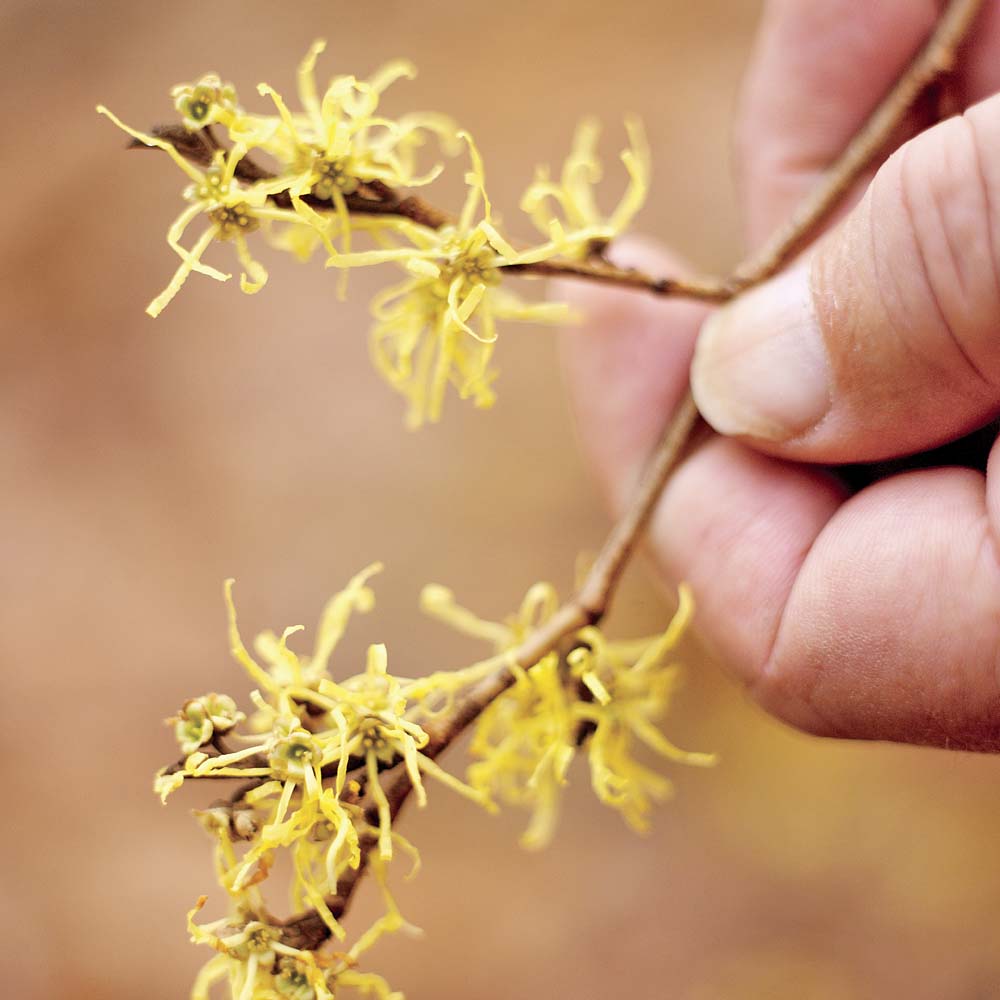
Eastern Connecticut is the witch hazel capital of the world

by Steve Kemper

Ben Hall
Credit: Julie Bidwell
Ben Hall has been harvesting witch hazel part-time since age 16.
Curtis & Stephen
Credit: Julie Bidwell
Curtis Strong and son Stephen, age 40, carry on a family tradition as fourth- and fifth-generation brush cutters.

It's only a slight stretch to say that the skin of America's women depends on a handful of New England woodsmen with rough hands and weathered faces. Without these "brush cutters," as they call themselves, there would be no witch hazel to put into the dozens of lotions, creams, gels, moisturizers, cleansers, conditioners, and shampoos made by, among others, Estee Lauder/Clinique, L'Oreal, Neutrogena, and Olay. Teenagers would panic at the disappearance of Proactiv. New Agers would miss mouthwash from Tom's of Maine. The deskbound would gingerly pine for Tucks Medicated Pads and Preparation H. Not to mention the throngs who pour witch hazel straight from the bottle to remove makeup or to soothe burns and bites.

Curtis Strong, his son Stephen, Ben Hall, and Ben's son Troy don't seem burdened by this responsibility for the hide, hair, and backsides of the American public. They do like to talk about witch hazel -- its peculiarities, the difficulty of finding it in the woods, the hard work of dragging the brush through snow and scrub, and how some things in the trade have changed while others never do.

Curtis Strong, like most who've done this work, comes from a long line of brush cutters. He's also an amateur historian of witch hazel. As a boy working with his grandfather, he chopped through the slender trunks -- "usually two swipes" -- dragged them to a wooden sled, and piled them high. Oxen or horses pulled the load from the woods to a wagon. Now 67, Strong semiretired his ax some years ago (and his razor long before that, judging by the length of his gray beard), but he still enjoys swinging at a good stand of brush.

The white-bearded senior Hall, 68, calls himself "the new guy" because he's been at it only since age 16. Brush cutting is part-time and seasonal -- November to April -- so Ben and Troy, 40, piece together a living that also includes firewood cutting, excavations, and bulldozing. Both families grew up in East Hampton, Connecticut, the heart of witch hazel country.

"You know the path on the right side of the Salmon River, near the covered bridge?" asks Curtis Strong. Ben Hall nods. They're standing in his barnyard in East Hampton. "We took a lot of brush out of there years ago," continues Strong. "Must be ready for cutting again." Hall's eyebrows go up like radar. Witch hazel regenerates.

Cutters spend a lot of time walking the woods, scouting. Sometimes they get tips from state foresters. They pay a set rate to cut in state forests and make individual deals with private owners. Then they sell their brush to the witch hazel distillery in East Hampton.

"You probably spend more time looking than cutting," says Strong. "But hard as it is to find it, I think it's even harder now to get permission to cut it." That reminds him of a dairy farm with a big stand of brush, probably 10 tons. "But they'd never let me cut it," he says. "I even used to bring the wife perfume. But nope."

"Now people are buying up the old farms," says Hall.

"And they turn them into house lots or they won't let you on to cut," says Strong.

"You ought to let me cut all that brush on your place," says Hall with a sly grin.

"He was just poking me," Strong says later. "He knows he can cut as much as he wants, as long as he pays me the right price."

Brush cutters have been having this conversation for 150 years, many of them within a few miles of this spot. "We're standing at the center of where 90 percent of witch hazel comes from," says Strong. The witch hazel industry requires hundreds of tons of brush per year, and it's all supplied by about eight families of cutters, most of whom live in central and eastern Connecticut. The Halls cut about 80 tons a year within a few miles of home.

Reader CommentsRSS

Comment from matthew housk on December 26, 2008

I had no idea about CT being a source for witch hazel.. Very interesting article.

http://soundbounder.blogspot.com/

Registered users can add comments.

Registration is free, and just takes a moment.

Login or Register.

YankeeMagazine.com information comes from the editors of Yankee Publishing, with the exception of directory information, which comes from advertisers. No advertising considerations are made when selecting and recommending any establishment, except where noted. Rates and event dates are subject to change. We strongly advise that you call first to confirm before setting out on your trip.

Advertise | Privacy Policy | Contact Us | Subscribe | Customer Service | Press Contact | Site Search | Employment | RSS Feeds

Interactive services developed and maintained by Reinvented Inc.

©2009, Yankee Publishing Inc. All Rights Reserved.
Yankee Publishing Inc., P.O. Box 520, Dublin, NH 03444, (603) 563-8111