African Violets Care and Feeding | Grow Healthy African Violets
Wondering how to grow and care for African violets? Our expert answers to questions relating to watering, fertilizing, repotting, and more are here to help.
African Violets Care and Feeding | Grow Healthy African Violets
Photo Credit : Pixabay
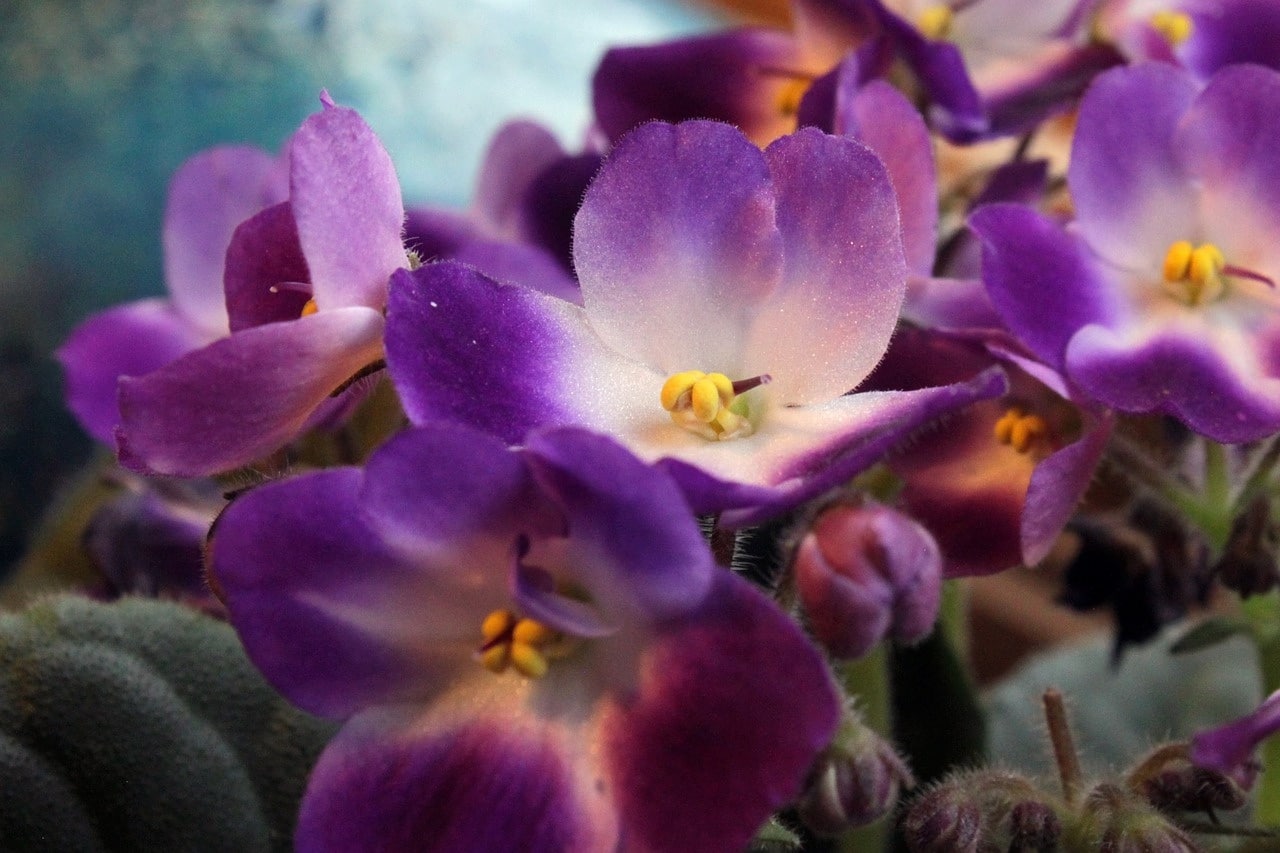
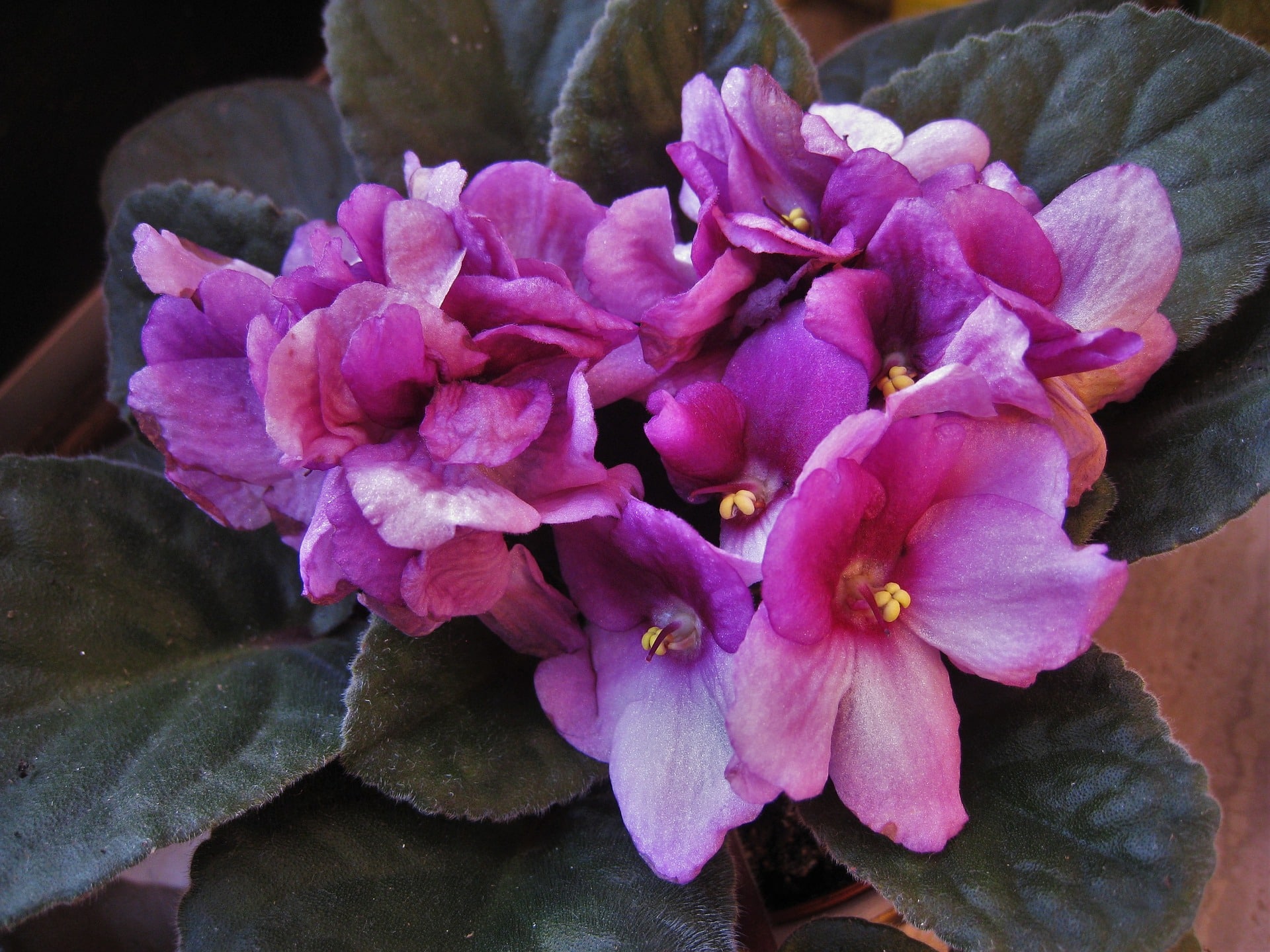
When Baron Walter von Saint Paul first brought a flowering plant he called the Usambara violet from East Africa to Germany in 1894, little did he know how many people would fall passionately in love with the African violet. Here are some of the most frequently asked questions about African violet care, along with prize-winning violet grower Jessie Crisafulli’s best advice. Her methods have produced a houseful of continuously blooming African violets, many of which sport blue ribbons won at flower shows.
African Violet Care and Feeding | Grow Healthy African Violets Photo Credit : Pixabay
African Violets Care & Feeding
What window exposure is best for African violets? African violets should grow well in any window with good bright light, not shaded by a porch or trees. In south-facing windows, protect violets from hot sun in summer with sheer curtains or blinds. African violets do well in a south window in the winter. For east and west windows, check to see that plants do not get too warm when the sun is in that area. North windows will provide sufficient light to bloom most of the year. Keep plants close to the window for maximum light. An African violet on a table in the middle of a room may look pretty, but may not receive sufficient light to keep blooming.
LEARN MORE: Sun-Loving Houseplants | 5 Windowsill ChoicesWhat about fluorescent light? If you do not have bright window light, then fluorescent fixtures are the answer. I use four-foot fixtures with two cool white bulbs in each. I have used one warm white and one cool white bulb in a fixture with good results. Special plant bulbs, called “grow lights,” also produce an attractive plant. The optimum distance from pot to light is 8 to 12 inches.
How often should you water African violets? “How often to water African violets?” is perhaps the most pondered African violet dilemma. The best guide is to feel the top of the soil: if it is dry to the touch, then it is time to water. African violets should be allowed to dry out between each watering for best results. Overwatering can kill a plant. The fine roots of an African violet need air, which cannot penetrate a soggy wet soil mass. Once you’ve mastered how to water African violets, half of your work is done.
Should I water African violets from the top or bottom? Either is fine. It is important not to use cold water; lukewarm or warm is preferred. If you water from the top, be careful not to get water on the leaves when the plant is in the sun; this is to avoid leaf spots. If you water from the bottom, the excess water should be discarded after the plant has taken up all it needs. Do not allow an African violet to sit in water indefinitely.
[text_ad]
What size pot is best for African violets? Overpotting will delay bloom. The usual recommendation is that the pot diameter should be one-third the spread of the leaf span. For example. if the plant’s leaves measure 9 inches from one leaf tip to the opposite leaf tip, use a 3-inch pot. Violets bloom best when they are potbound.
Which is better, a clay or plastic pot? Either is suitable. Plastic pots can be kept cleaner and will hold moisture longer, and are what I use for violets. Clay pots allow the air to penetrate to the roots, which is beneficial. but they dry out faster. I use clay for succulents and cacti. Salts may build up on clay pots, rotting violet leaves resting on the top rim. Protect the leaf stems by using a folded strip of aluminum foil to cover the top rim of a clay pot.
What’s the best fertilizer for African violets? Any reputable fertilizer is good. I like to use a water-soluble fertilizer. A balanced fertilizer with equal parts of nitrogen (first number), phosphorus (second number), and potash (last number), such as 18-18-18, has produced good show plants for me. If you are not getting good bloom try a fertilizer with a higher middle number, which will contain more phosphorus, such as 15-30-15
Should you withhold fertilizer when the African violet is in bloom? In my opinion this is poor practice. African violets need food when producing blossoms, and since the plant ideally should bloom continuously. It would severely deprive the plant if fertilizer were withheld.
African Violets Care and Feeding | Grow Healthy African Violets Photo Credit : PixabayWhat soil mix should I use? I use a mixture of two parts sterilized soil, one part coarse perlite, and one part coarse vermiculite. Any purchased sterilized soil can be used. Perlite and vermiculite help keep the soil loose and porous.
The lower leaves turn soggy — should I take them off? It is a good practice to remove all African violet leaves that have started to decay. It is a natural process for older leaves to die off. They will be replaced by new growth in the center of the plant. Any bottom leaves turning yellow or spotted should be removed.
LEARN MORE: How to Prune HouseplantsWhat is wrong when the soil is wet but the plant seems limp? This may be an indication that the plant has been overwatered, and possibly crown rot has set in. There is not too much that can be done. You may be able to take off a healthy leaf or two to start a new plant, but the old plant may not live if the center crown has started to rot.
How often should I repot my African violet? Repotting African violets is beneficial to the plant’s lasting health. Repot in fresh soil every year or two at most. Do not necessarily use a larger pot each time you repot.
LEARN MORE:How to Repot African VioletsWhat should be done with an African violet has developed a thick stem below the bottom leaves? This is usually called a neck. It can be taken care of by setting the plant deeper into the soil when you repot. Use the proper size pot, not one that is too large or too deep. If the “neck” is too high, carefully remove some of the old soil from around the violet’s roots, so it can be lowered further down into the pot. If the soil and roots are hard and compacted, and cannot be loosened, then a portion of the bottom of the root mass can be sliced off with a knife. Repot so that the lower layer of healthy green leaves rests on the soil line at the top of the pot.
Editor’s Note: This is a Yankee Classic article from January 1982. While, we are no longer able to respond to questions about African violets that are not covered within this article, you may find the answer you are seeking in the comment section below.
This post was first published in 2014 and has been updated.