Whether they come as leaf peepers, antiques hunters, or Freedom Trailers, travelers in New England frequently find themselves gawking at houses and New England architecture. And no wonder. With nearly 400 years of settlement behind it, New England hosts a collection of architectural styles that are older and more varied than in any other part of the country.
“Name That House!” was originally published in Yankee Magazine in June, 1991.
New England Architecture | Guide to New England House Styles
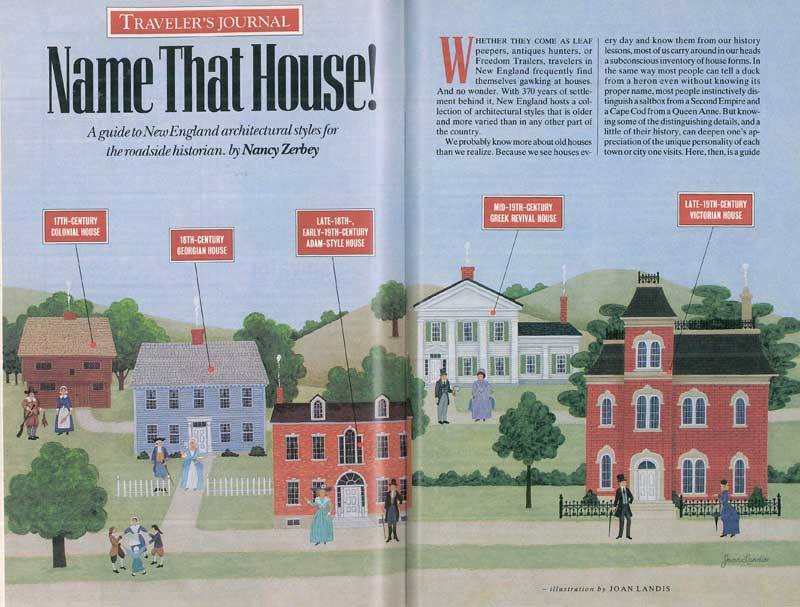
We probably know more about old houses and New England architecture than we realize. Because we see houses every day and know them from our history lessons, most of us carry around in our heads a subconscious inventory of house forms. In the same way most people can tell a duck from a heron even without knowing its proper name, most people instinctively distinguish a saltbox from a Second Empire and a Cape Cod from a Queen Anne. But knowing some of the distinguishing details, and a little of their history, can deepen one’s appreciation of the unique personality of each town or city one visits. Here, then, is a guide to five common New England house styles dating from 1630 to 1900.
17th-Century Colonial Houses (1630-1700, locally to 1740)
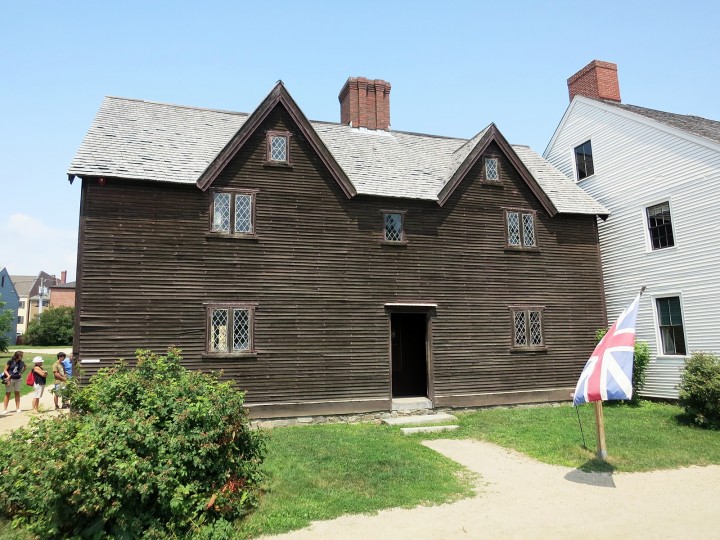
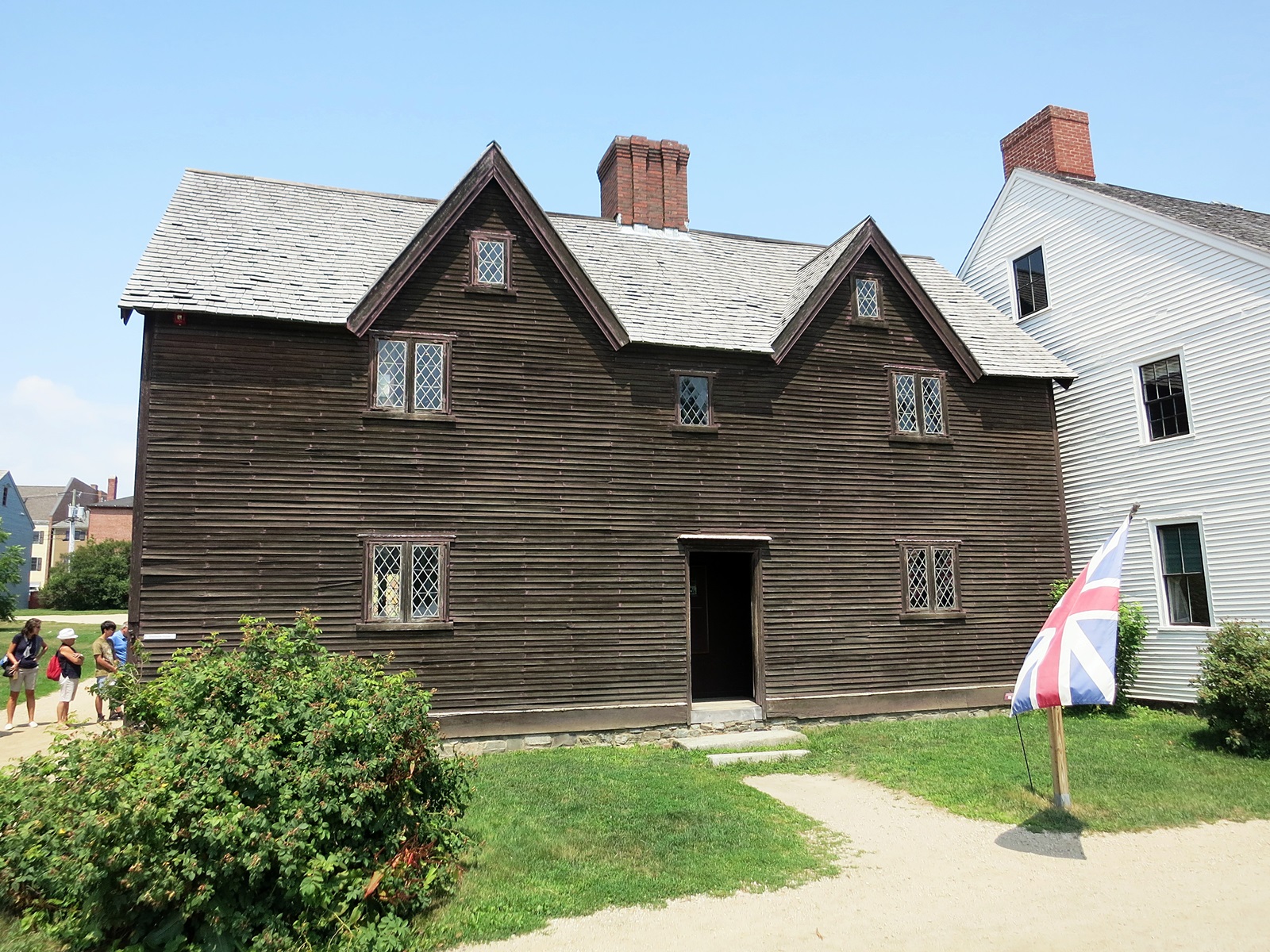
New England Architecture: The Colonial Sherburne House (c. 1695-1703) at the Strawbery Banke Museum in Portsmouth, New Hampshire. Photo Credit : Aimee Seavey
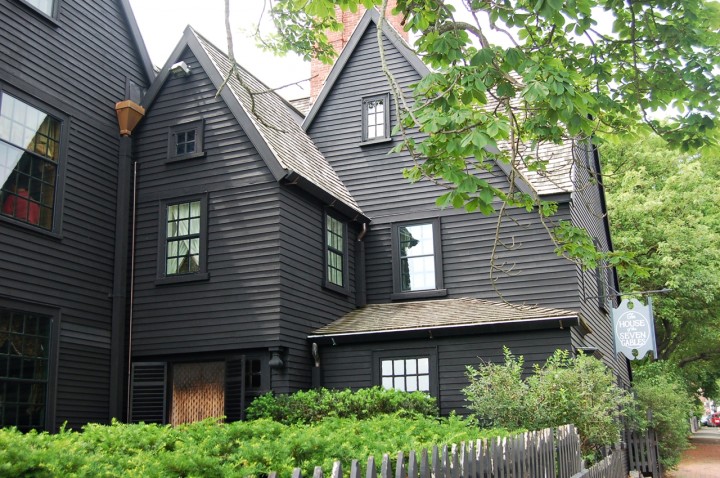
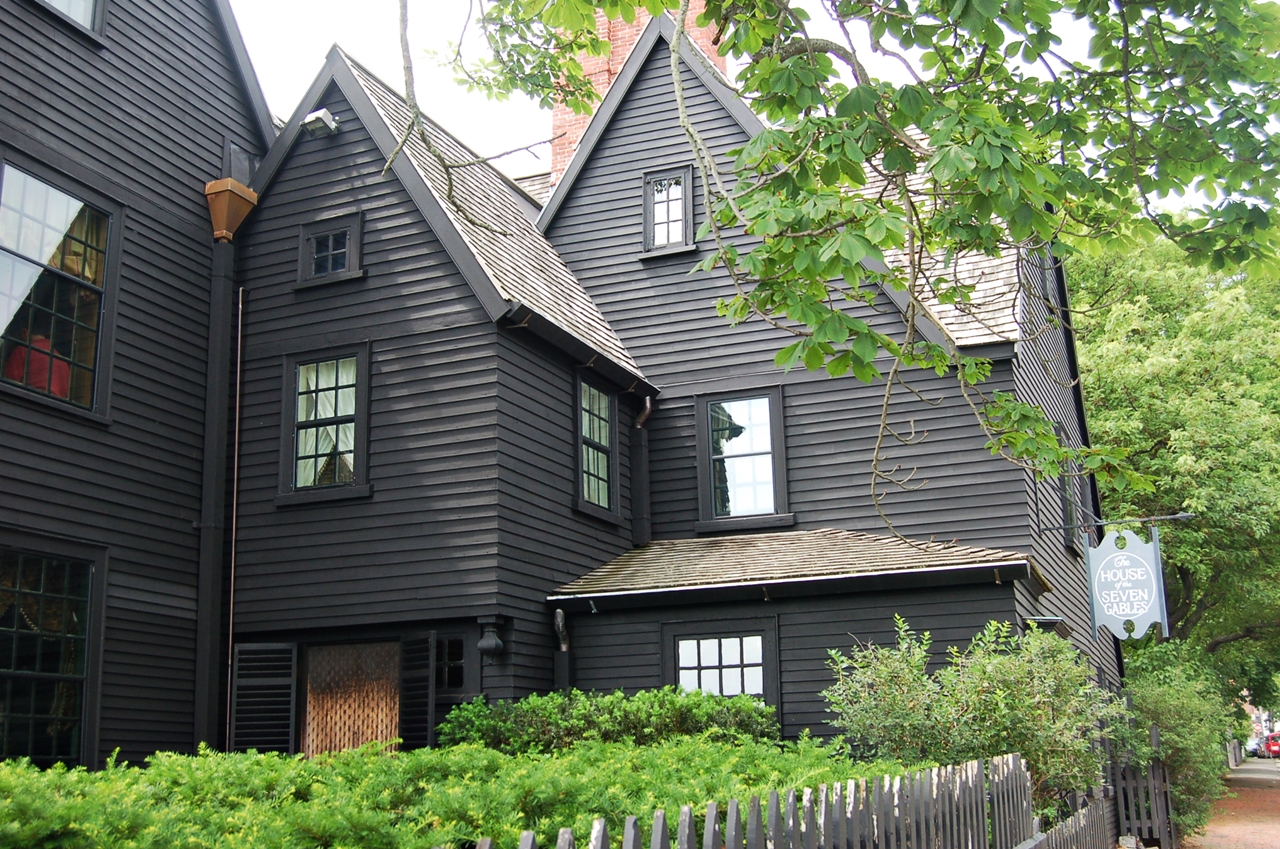
Colonial houses are usually side-gabled (roof ends at the sides of the house), flat-faced, wooden structures, covered with narrow pine clapboards, although most of the earliest ones had shingles. With no eaves, shutters, stoops, porches, window trim, or door decoration, these houses present a very plain facade, relieved only in some examples by a jutting overhang of the second story – the “garrison” style. Old and heavy, they seem to grow straight out of the ground.
As honest and sturdy as the settlers who built them, these houses were built to take weather. Whenever possible, they were built facing south for winter warmth. Their very steep roofs were designed to shed snow. Small, diamond-paned windows and heavy, vertically planked doors helped keep heat indoors. The massive chimney was usually placed in the center of the roof, but appears as an exterior feature in Rhode Island “stone-enders.”
New England Architecture: The Colonial House of the Seven Gables (1668) in Salem, Massachusetts. Photo Credit : Aimee Tucker
The original form of Colonial houses was a simple one-room, two-story box. In time, many of the houses were built out backward to make room for growing families and storage goods. The resulting slant-roofed “saltbox” shape was a sure sign that the colonists’ tenuous hold on New England was becoming more secure.
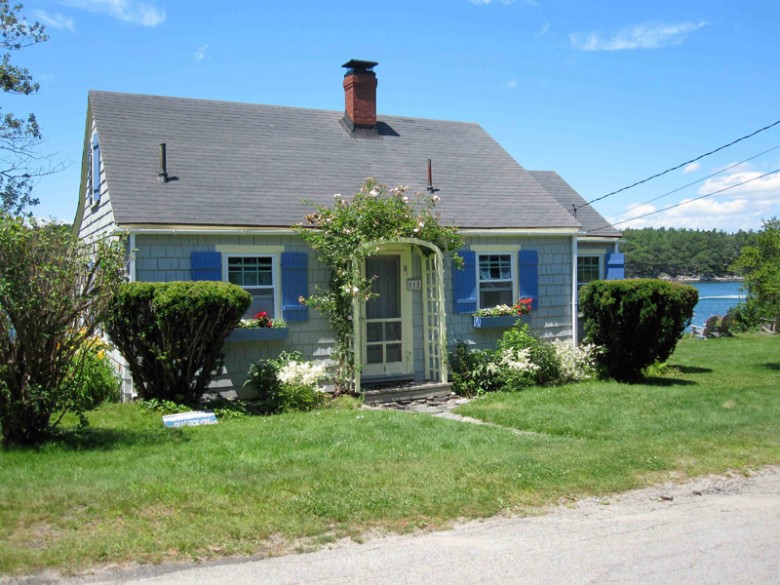
New England Architecture: A coastal classic Cape Cod house. Photo Credit : Annie Graves
A variation on the theme is the classic Cape Cod house — wood frame, 1-1/2 stories high with a pitched roof, little or no space between windows and roof gutter, and no overhang on the gables. The classic is the full Cape, with a central door, and two windows symmetrically on each side. The three-quarters Cape has two windows on one side of the door and only one on the other side; the half Cape has only two windows and a door to their side.
Georgian Houses (1700-1780, locally to 1830)
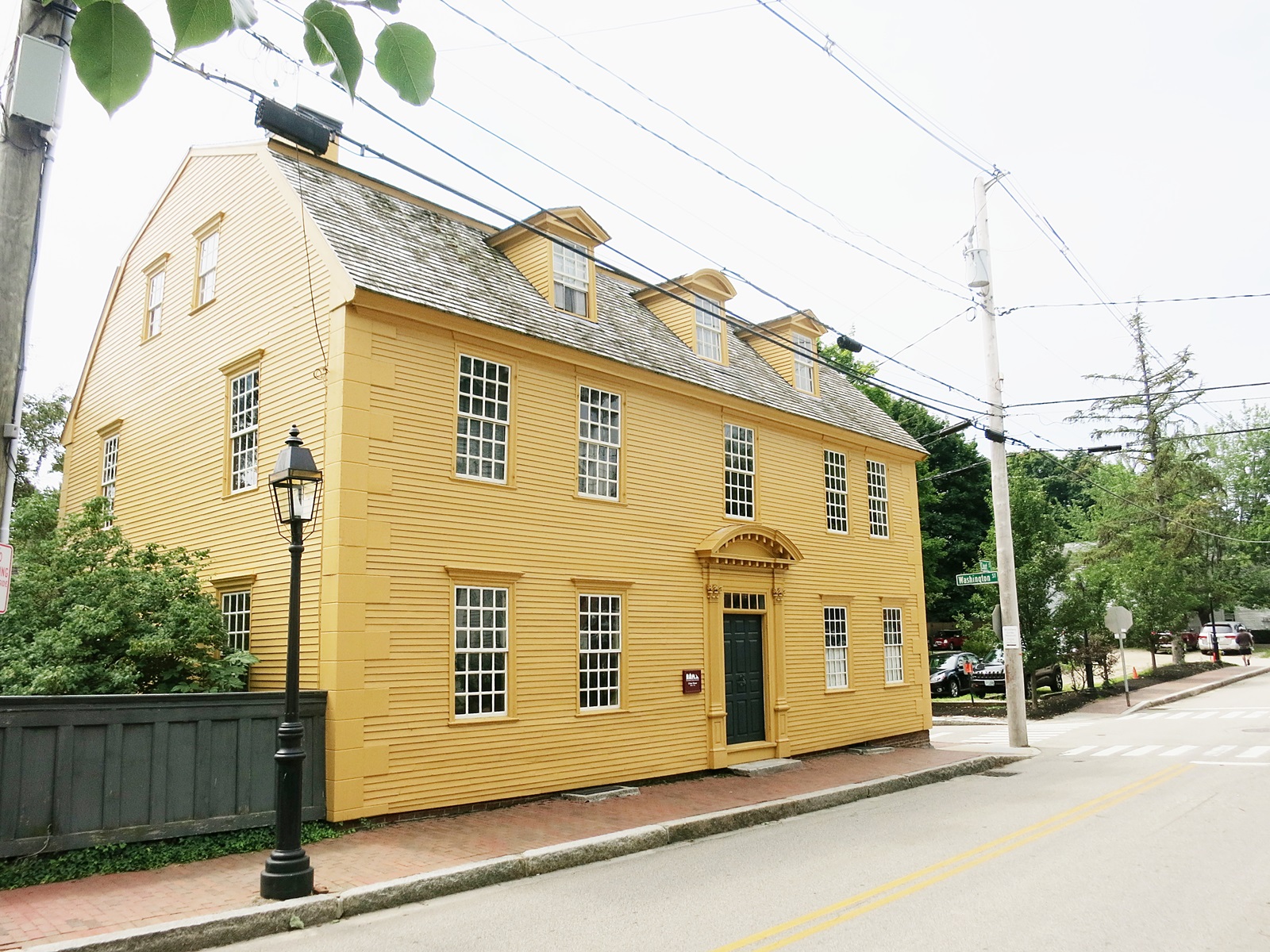
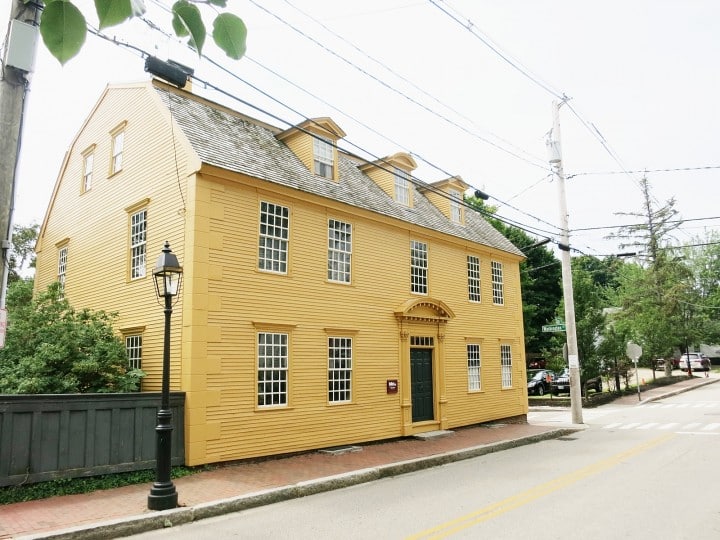
New England Architecture: The Georgian Chase House (1762) at the Strawbery Banke Museum in Portsmouth, New Hampshire. Photo Credit : Aimee Seavey
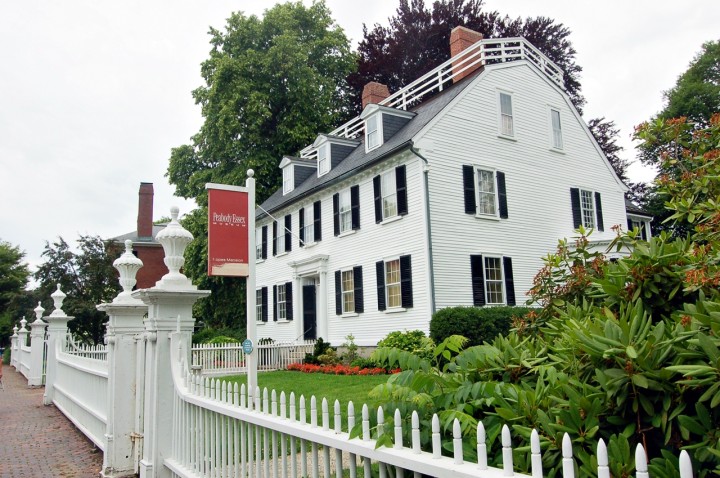
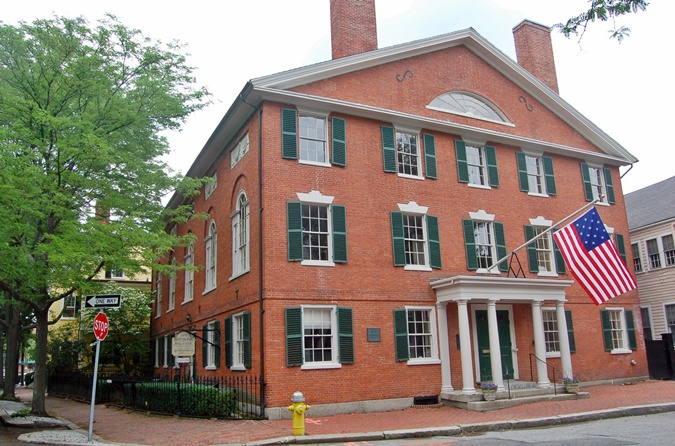
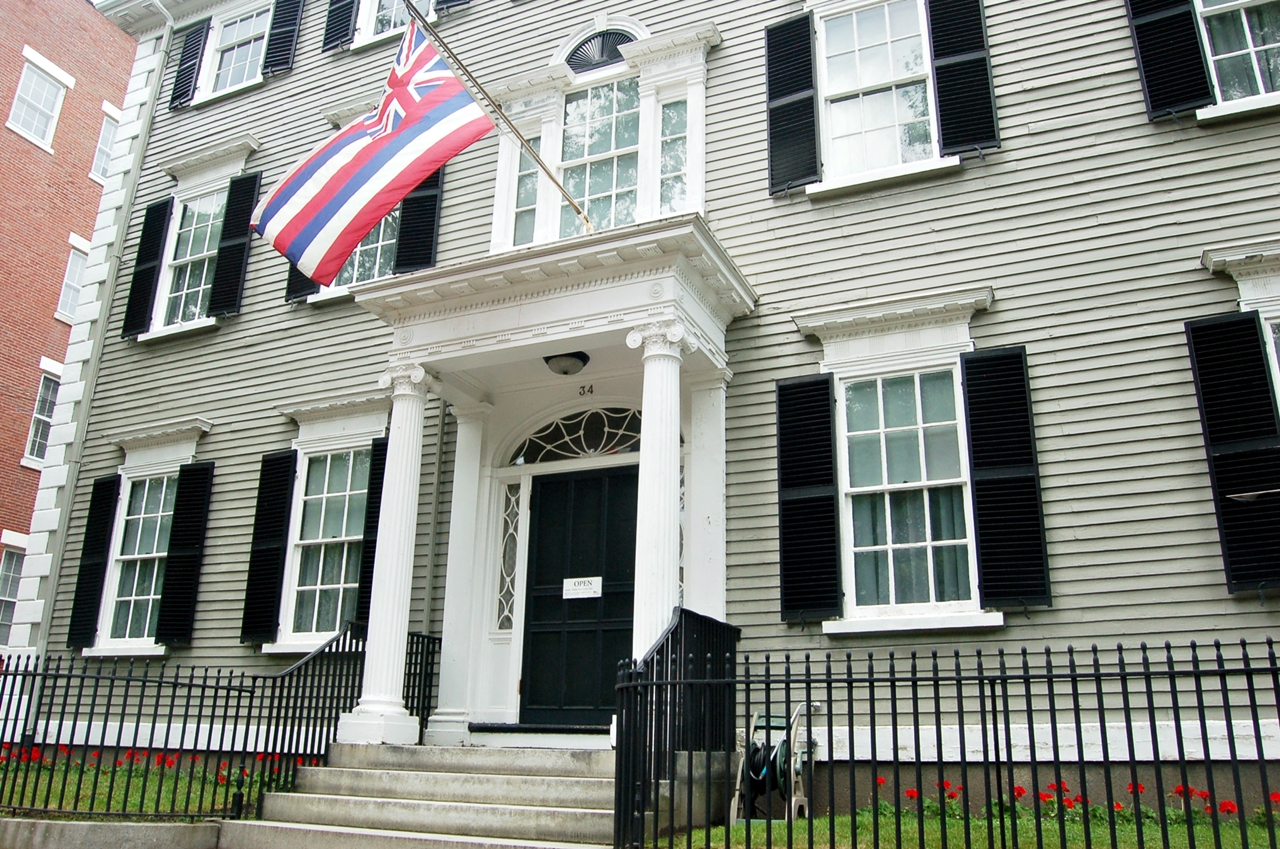
In roof form, chimney placement, and cladding, Georgian houses are much like their Colonial predecessors. However, they are bigger, typically two stories high and two rooms deep, and the roofs only moderately pitched. Many were unpainted and often shingled, but some scholars believe they were originally painted in blue-green, salmon, and mustard-yellow colors. What chiefly distinguishes Georgians from Colonials is their civility. As the colonists prospered, their houses became better mannered.
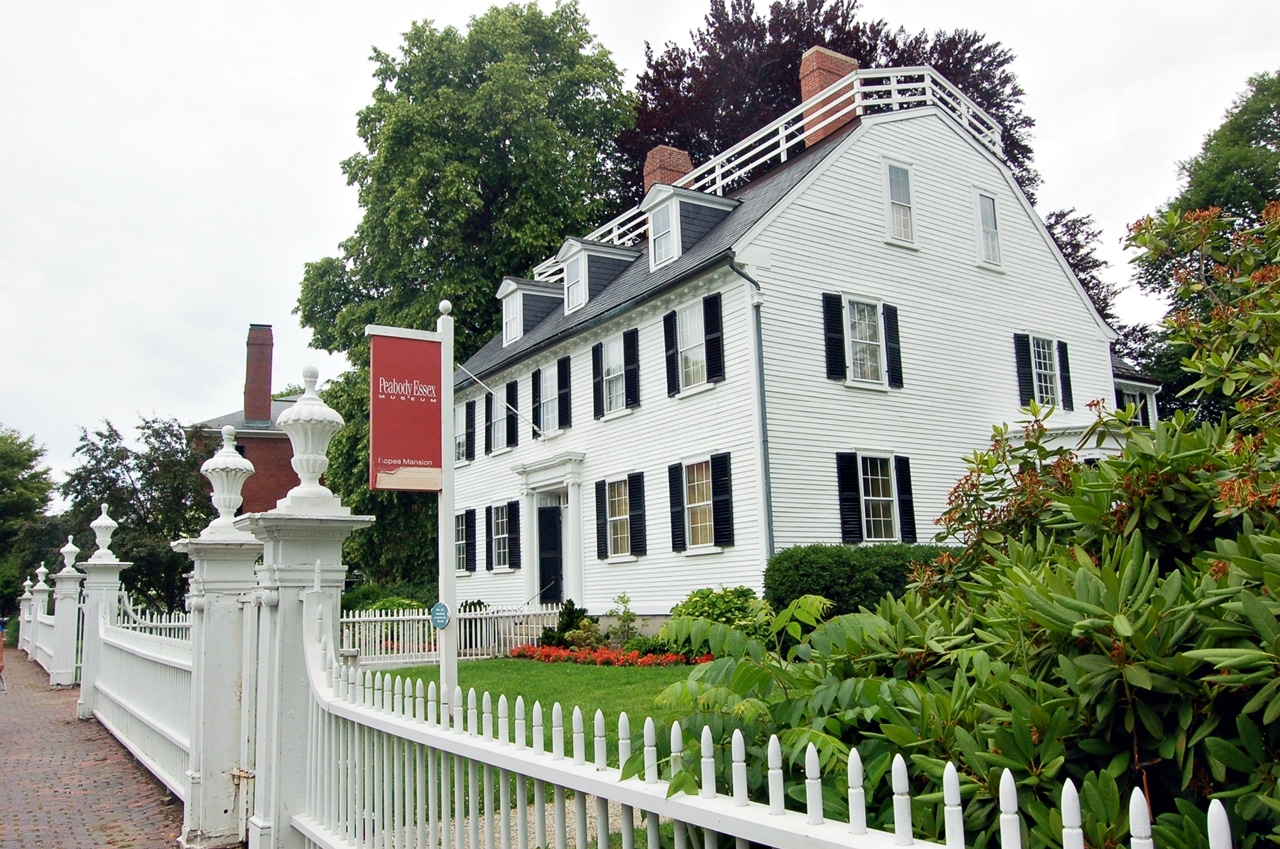
Georgian houses are best identified by the orderly plan of their windows and doors. The window placement on the front facade is absolutely regular. The windows march across the second story, usually at even-spaced intervals and almost always in odd numbers of three, five, or seven across. The lower-story windows appear directly below the uppers with the doorway in the center, making the facade exactly symmetrical. The windows themselves are double-hung, typically with nine to 12 panes per sash.
[text_ad]
Decoration is restrained and focuses on the doorway. The door itself, sometimes a double door, is no longer planked but paneled. Flattened columns flank the door and support an overhead crown, which is most commonly straight or triangular, but is sometimes curved or scrolled. In the high Georgian style, a row of square-toothed dentil molding typically parades along the cornice under the overhanging roof eave.
New England Architecture: The Georgian Ropes Mansion (late 1720s) operated by the Peabody Essex Museum in Salem, Massachusetts. Photo Credit : Aimee Seavey
Georgian houses are like British regimental officers. They are solid, unblinking, upright, and true – and little prone to imagination. They occasionally appear in fancy dress, wearing roof balustrades or pedimented dormers, for instance, but they are essentially soldiers, stoutly defending the good citizens living within their orderly walls.
Adam-Style Houses, Also Called Federal (1780-1820, locally to 1840)
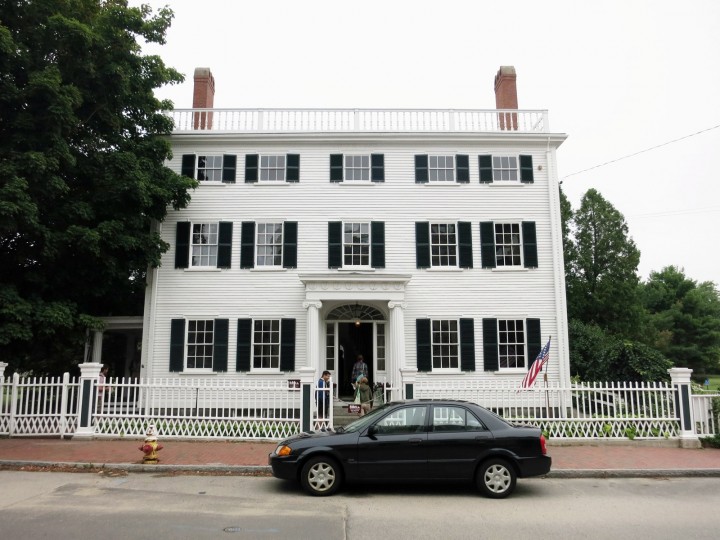
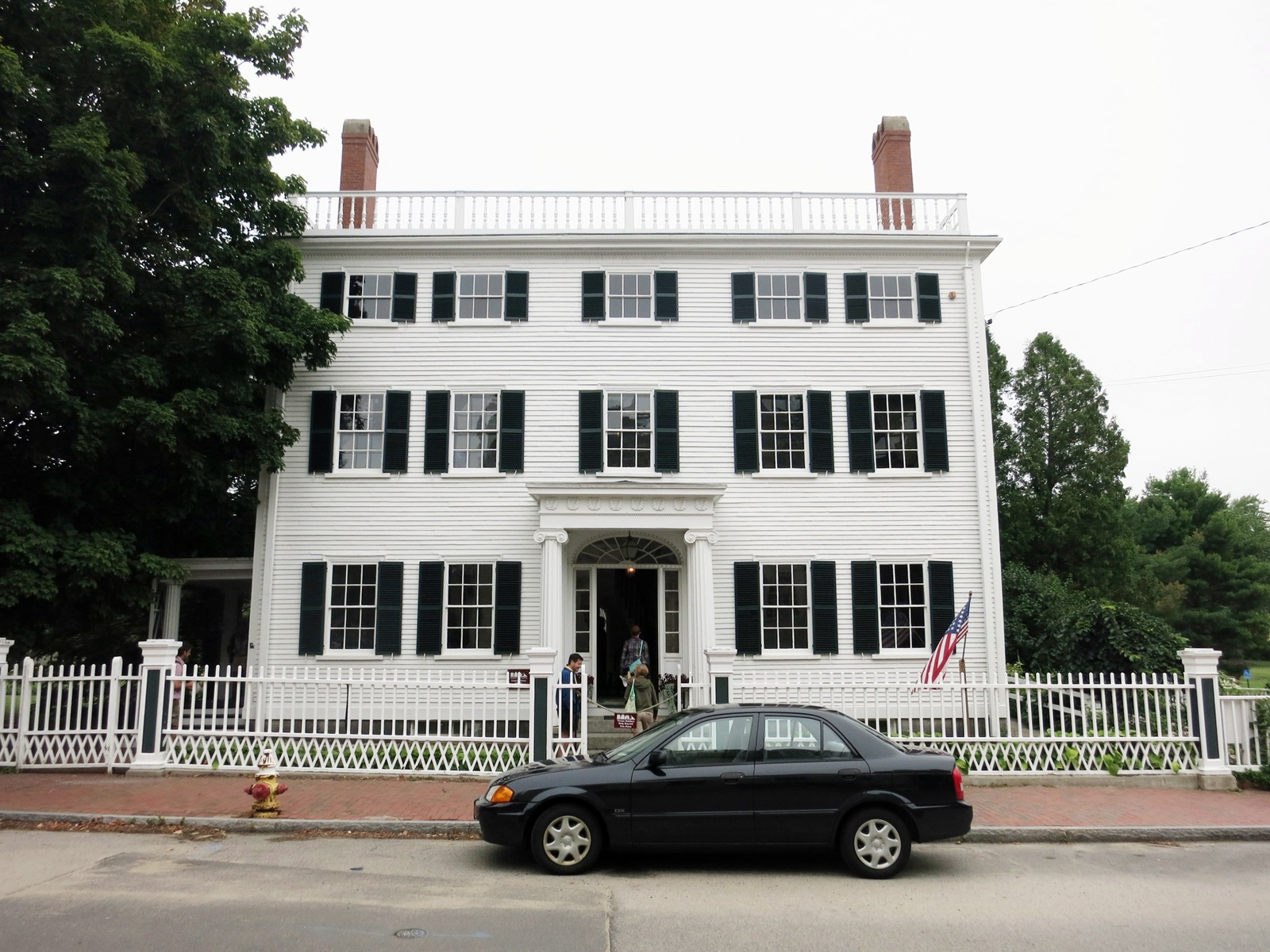
New England Architecture: The Federal Goodwin Mansion (1811) at the Strawbery Banke Museum in Portsmouth, New Hampshire. Photo Credit : Aimee Seavey
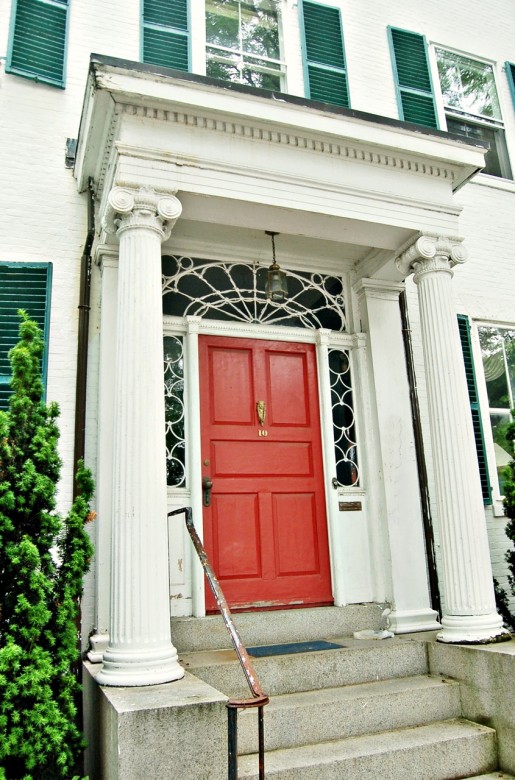
If Georgian houses are soldiers, Federal houses are burghers and princes. The two styles are closely related, but Federal houses can usually be distinguished by their freer, more elaborate detailing. For quick identification, look at the arrangement of glass below the crown of the front doorway: if there is a row of small rectangular windows, the house is almost certainly Georgian; if there’s an elliptical or semicircular fanlight, it’s probably Federal.
On closer inspection, the entire facade is more “glassy.” Vertical sidelights often flank the entrance, making the doorway larger. To balance it, a large, tripartite Venetian or Palladian window sometimes appears above the door on the second story. The panes in all windows are now bigger, sometimes as large as a foot across, and often number six per sash instead of the usual nine or 12 in Georgian’ houses.
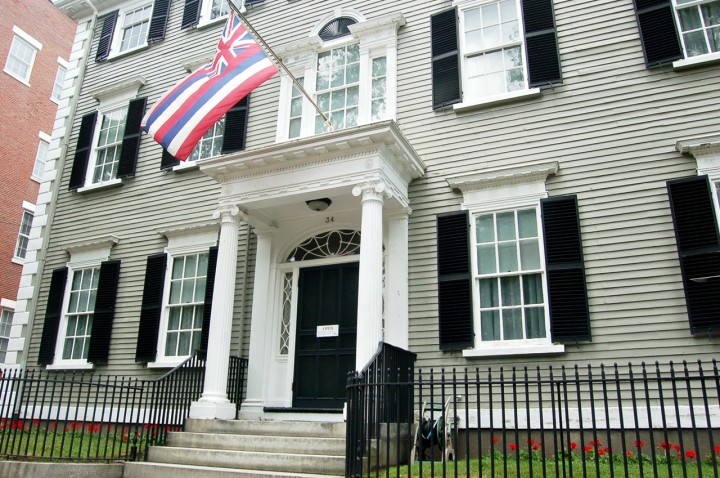
New England Architecture: The Federal Phillips House (1821) managed by Historic New England in Salem, Massachusetts. Photo Credit : Aimee Seavey
To draw attention to this generous glasswork, Federalist builders sometimes crowned their windows with lintels or recessed them in arches. They also dropped the top-story windows down from the eaves, where they had crowded against the roof in Georgian houses, thus freeing space for more decorative cornices. Dentil moldings remain popular, but now friezes are sometimes added. These friezes commonly depict free-flowing garlands or swags or a stylized pattern of urns, lotus buds, sheaves of wheat, or medallions. Similar decoration may also appear on doorway surrounds.
New England Architecture: The Federal Hamilton Hall in Salem, Massachusetts. Photo Credit : Aimee SeaveyNew England Architecture: A Federal doorway in Salem, Massachusetts. Photo Credit : Aimee Seavey
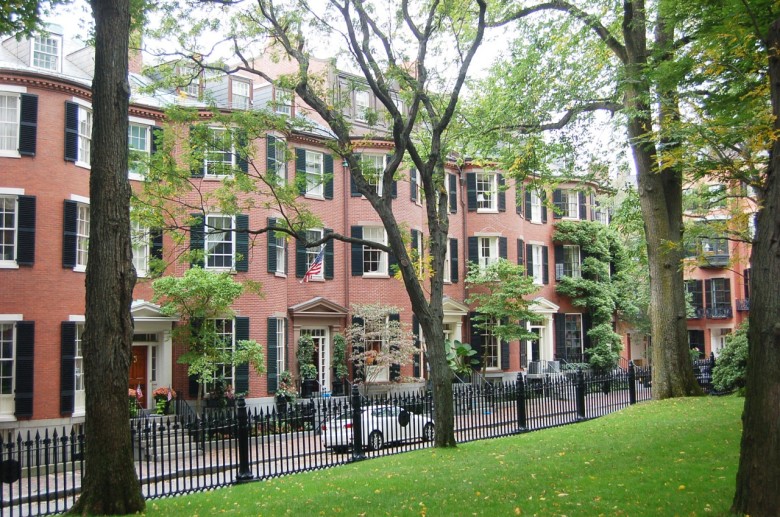
These Adam-style design elements signal a break from the flat planes and resolute squareness of older Georgian houses. The earlier bas-relief doorway surround becomes elaborated into a small porch in Federal houses, and for the first time bays, bows, and balconies appear on the facade, especially in later high-style examples and in the brick and stone town houses on Boston’s Beacon Hill.
New England Architecture: Federal stone row houses in Boston’s Beacon Hill. Photo Credit : Aimee Tucker
Dignified, imposing, sophisticated, and sure, Federal houses have an air of self-satisfaction well suited to a people who had but recently won their freedom and intended to make the most of it.
Greek Revival Houses (1830-1850)
New England Architecture: The Nathanial Lord Thompson house in Kennebunk, Maine is an example of Greek Revival architecture. Photo Credit : Brenda Darroch
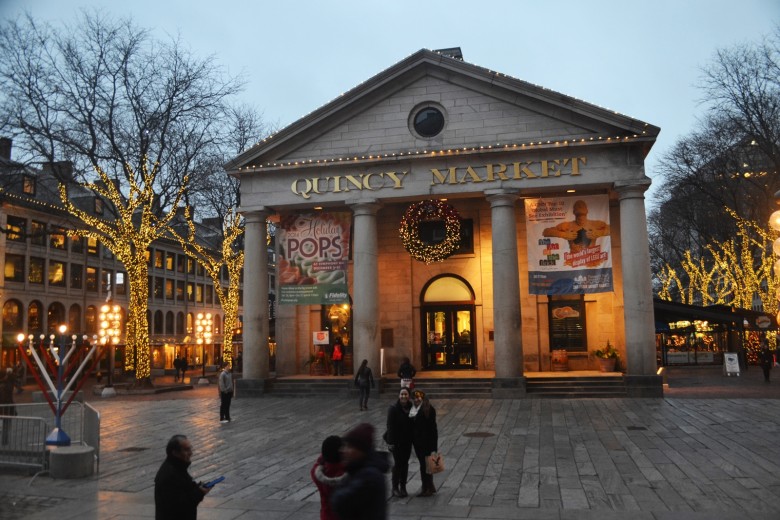
Driving into a sleepy New England town, the traveler may suddenly find himself confronted with the Parthenon. This happens frequently, for in the first half of the 19th century, Americans’ enthusiasm for things democratic spawned a radical backward turn in architecture, all the way back to the public buildings of the original democracy of ancient Greece. The resulting Greek Revival houses are the easiest of all New England house styles to identify because they look so utterly out of place.
New England Architecture: The Greek Revival Quincy Market glows during the holiday season. Photo Credit : Aimee Seavey
By 1850 New England’s admiration for the bold, clean lines of classical architecture had waned, but one common feature of Greek Revival houses, especially the high-style ones, endured: the transformation of the old side-gabled house into a front-gabled house. By rotating the house 90 degrees, Greek Revival builders faced the peak of the roof on the street, where the cornice detailing could be shown to better advantage. Later builders, caught up in the craze for Victorian houses, made extravagant use of this simple change of house plan.
Victorian Houses (1855-1900)
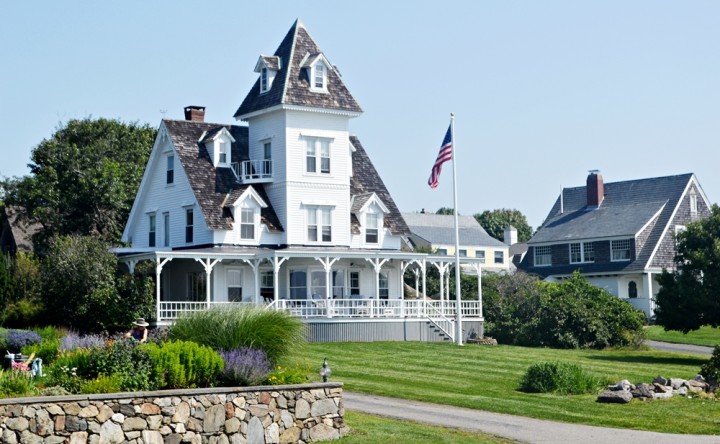
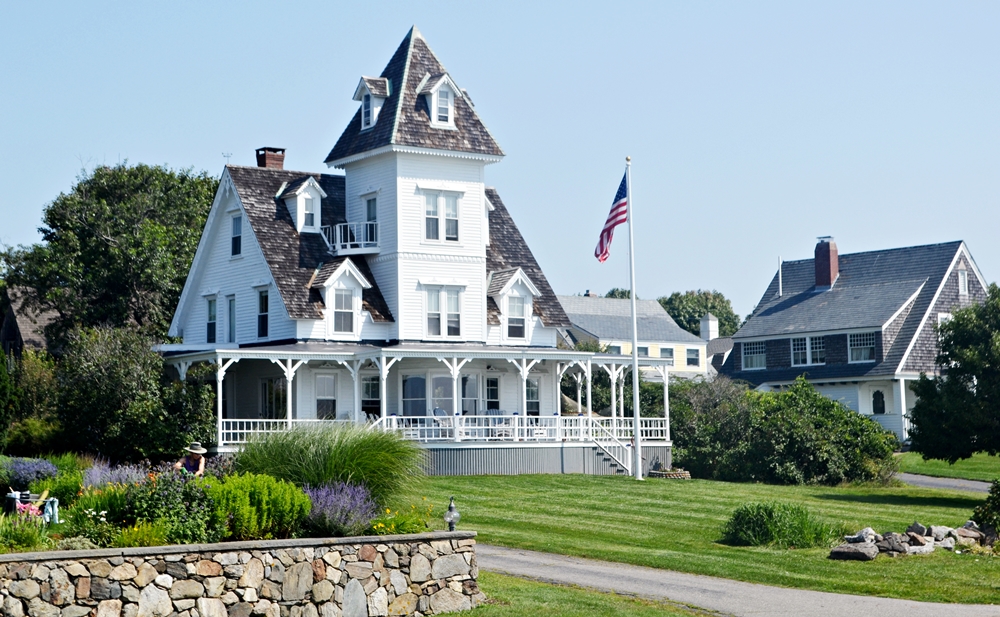
New England Architecture: A Victorian sits overlooking the Atlantic Ocean on the New Hampshire seacoast. Photo Credit : Aimee Seavey
The Victorians may have been straitlaced in their corsets and tight in their collars, but they were joyous and free in their houses. “Victorian” is not one style but several. It is often described as eclectic, meaning that the houses can look like just about anything. But what it means in this case is that Victorian houses look almost nothing like any of the houses that came before.
Gone are the pediments, pilasters, and porticoes. Gone are the fanlights and transom lights. Gone are 200 years of straight lines, plain faces, and unbending squareness. Weary of balance and symmetry, Victorian houses prefer to show off.
There is so much going on in Victorian architecture, and so much unabashed borrowing, that it is difficult to sort out the individual house styles. But there are some common elements. Steep, many-gabled roofs, irregular floor plans, and an asymmetrical arrangement of windows and doors give Victorian houses their characteristically excited look. Patterned roofs and multi-textured walls show off the builders’ experimentation with curves, arches, hexagons, and other complex shapes. Porches appear everywhere, along with the profusion of fanciful detailing familiarly known as “gingerbread.”
Some Victorian house styles can be distinguished by their “feel,” others by characteristic features.
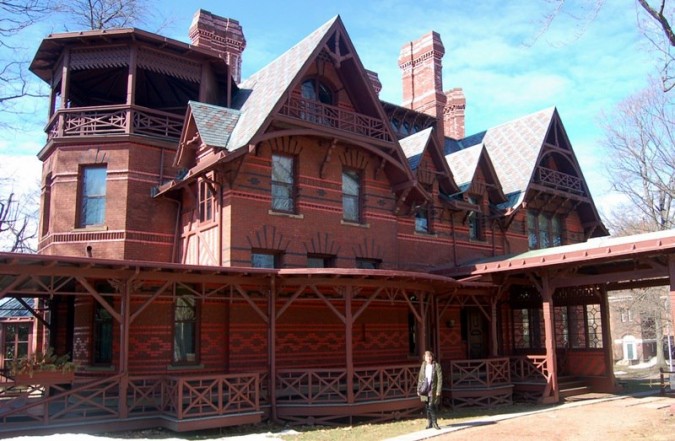
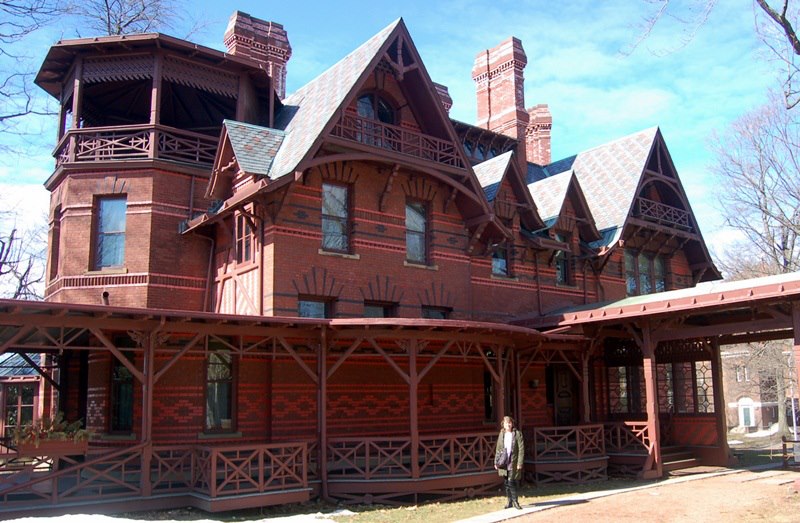
New England Architecture: The Queen Anne Victorian Mark Twain House in Hartford, Connecticut. Photo Credit : Aimee Seavey
Second Empire houses are queenly. The diagnostic feature is the mansard roof carried like a crown on decorative brackets. With their projecting central pavilions, very tall windows, and iron roof cresting, these are the most stately of the Victorians. Queen Anne houses often look pointy and sometimes higgledy-piggledy, for it is in this type that the roofs are steepest and building most asymmetrical; corner bays and towers accentuate this effect. Spindlework porches, patterned shingling, and stained glass make this the archetypical gingerbread house.
Shingle houses are covered with shingles from top to toe and have less fancy trim work. With their smooth walls, multi-eaved roofline, and intersecting gables, they give the impression of a ship under full sail.
Are you a fan of historic New England architecture?
More Information on New England Architecture:
An excellent keep-in-the-car reference is A Field Guide to American Houses by Virginia and Lee McAlester (Alfred A. Knopf; revised 2015).
To learn more about historic New England architecture (including houses open to the public) contact Historic New England, 141 Cambridge St., Boston, MA 02114; 617-227-3956.





 “Name That House!” was originally published in Yankee Magazine in June, 1991.